
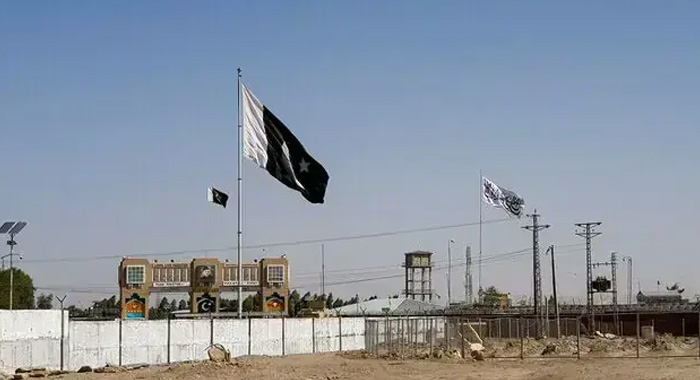
An alarming deterioration in relations between Pakistan and Afghanistan has placed South Asia on a precarious edge, the International Crisis Group (ICG) warned in its latest assessment, cautioning that continued militant violence could trigger renewed cross-border military action by Islamabad.
According to the Brussels-based independent and non-profit think tank, Pakistan has emerged as the country most affected by the Taliban’s return to power in Afghanistan in 2021. While a fragile pause in direct confrontation currently holds, ICG notes that the situation remains volatile and could rapidly escalate if militant attacks persist.
The report highlights a sharp rise in violence inside Pakistan since 2022. In 2025 alone, more than 600 Pakistani military and police personnel were killed in militant attacks, the majority in Khyber Pakhtunkhwa and Balochistan—provinces bordering Afghanistan. Islamabad attributes these attacks primarily to the outlawed Tehreek-e-Taliban Pakistan (TTP) and Baloch militant groups, alleging they operate from Afghan territory and receive external backing, including support from India claims New Delhi denies.
At the core of the diplomatic rupture, ICG says, is the Afghan Taliban’s refusal to take action against the TTP. United Nations monitors have assessed that the TTP enjoys support and safe haven in Afghanistan, an assertion repeatedly rejected by Taliban authorities, who deny the presence of Pakistani militants on Afghan soil and frame the violence as Pakistan’s internal issue.
Tensions escalated sharply after an October 8 attack by the TTP along Pakistan’s western border, which killed 11 Pakistani soldiers. Islamabad responded with airstrikes across the border, including its first strike near Kabul, reportedly aimed at senior TTP leadership. Afghanistan retaliated with attacks on Pakistani military positions, setting off clashes that resulted in both military and civilian casualties on both sides.
ICG warns that any future attack traced back to Afghanistan could prompt a far more severe response from Pakistan. Although the Taliban government remains militarily weaker, the report cautions that its retaliation could still be lethal. Kabul has claimed it possesses missile capabilities that could reach Pakistani cities an assertion that, if tested, would almost certainly provoke an overwhelming response from Islamabad.
The think tank concludes that without urgent de-escalation and credible action against militant networks, the region risks sliding into a cycle of retaliation with grave consequences for regional stability, civilian lives, and already strained diplomatic relations.



