
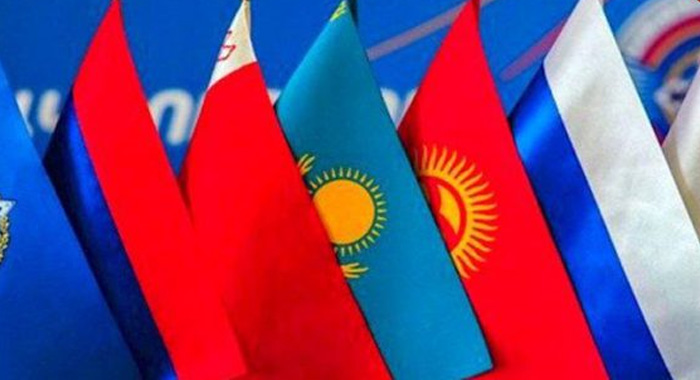
The Collective Security Treaty Organization (CSTO) has raised renewed concerns over the evolving security situation in Afghanistan, warning that potential threats and risks emanating from its territory remain significantly high despite the absence of an immediate regional crisis.
The warning was issued following the 43rd meeting of the Afghanistan Working Group under the CSTO Council of Foreign Ministers, held at the organization’s secretariat in Moscow. The high-level meeting brought together delegations from CSTO member states alongside representatives from the United Nations Office of Counter-Terrorism, the Shanghai Cooperation Organization (SCO), Commonwealth of Independent States (CIS) anti-terrorism bodies, and the International Committee of the Red Cross (ICRC).
Participants conducted a comprehensive review of Afghanistan’s current military, political, and humanitarian landscape, with a particular focus on its implications for regional and international security. Discussions highlighted the continued fragility of Afghanistan’s internal environment and the risks it poses to neighboring states, especially in Central Asia.
In its official statement, the CSTO emphasized the need for sustained humanitarian and economic assistance to the Afghan population, underscoring that ongoing instability should not hinder international support efforts. At the same time, officials stressed the importance of continuous monitoring of developments within Afghanistan and called for coordinated efforts to promote peaceful processes and mitigate the risk of cross-border spillover.
The meeting reflects deepening concerns among CSTO members and regional stakeholders that instability in Afghanistan could be exploited by extremist and militant groups. Analysts note that factors such as weak governance structures, porous borders, and ongoing regional tensions create an environment conducive to the movement and expansion of such groups.
Security concerns extend beyond immediate military threats. Regional actors remain increasingly wary of cross-border militancy, illicit trafficking networks, and the movement of armed groups, all of which could destabilize neighboring countries. These concerns have prompted greater coordination among regional security organizations, particularly as Afghanistan remains outside formal security frameworks while continuing to exert significant influence on them.
In parallel, international organizations have highlighted the compounding humanitarian and economic challenges within Afghanistan. According to the United Nations, millions of Afghans remain dependent on humanitarian assistance, while declining international funding and the return of large numbers of refugees have intensified pressure on already strained systems.
The CSTO has consistently identified Afghanistan as a primary external security concern for its Central Asian member states, particularly Tajikistan and Kyrgyzstan. Since the Taliban’s return to power in 2021, these concerns have sharpened, even though large-scale destabilization beyond Afghanistan’s borders has thus far remained limited.
The latest warning underscores a complex and evolving reality: while an immediate regional crisis may not be imminent, Afghanistan continues to sit at the center of overlapping security, political, and humanitarian challenges. For CSTO members and their partners, the priority remains clear—containing emerging risks while preventing Afghanistan’s instability from further unsettling the broader Central Asian region.



