
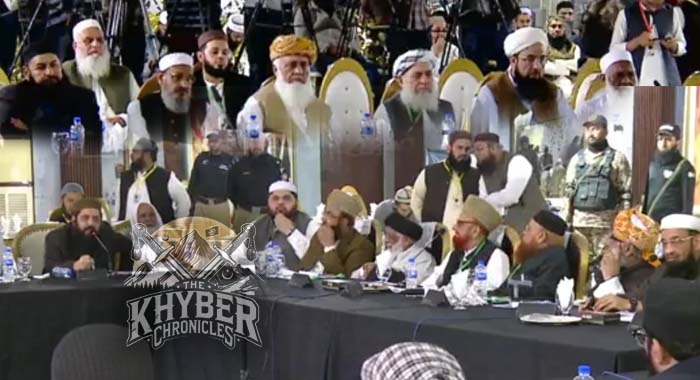
A consultative and scholarly representative convention of religious scholars belonging to all schools of thought and various religious parties and organisations, held under the auspices of Majlis Ittehad-e-Ummat Pakistan, unanimously declared that peaceful, constitutional and democratic struggle is the only viable path for reforming the country and implementing Shariah, while unequivocally rejecting armed struggle in the prevailing circumstances of Pakistan.
The declaration was issued at the conclusion of the convention held in Karachi on Monday, December 22, 2025, which was attended by prominent ulema representing all sects and leading religious organisations. The gathering reaffirmed that armed struggle, whether carried out in the name of Islam or nationalism, is neither a requirement of Islam nor in line with the objectives and wisdom of Shariah under current conditions. The scholars observed that multiple external forces are actively seeking to weaken Pakistan and push it towards internal chaos and fragmentation, and in such an environment, any form of militancy would only serve the interests of forces hostile to the country.
The convention strongly condemned all armed activities within Pakistan and reiterated its collective stance against violence. At the same time, it called upon the government to address the issue of unrest with wisdom, foresight and prudence, stressing that lasting peace cannot be achieved without responding to legitimate public grievances and resolving conflicts through just and thoughtful measures rather than force alone.
The gathering also expressed grave concern over the prevailing tensions between the Islamic Republic of Pakistan and the Islamic Emirate of Afghanistan, warning that the current situation is detrimental to the interests of both countries and ultimately benefits anti-Islam forces. The scholars urged the Afghan authorities in strong terms to ensure that their territory is not used as a base by disruptive groups and elements that exploit available facilities to carry out acts of terrorism and sabotage inside Pakistan.
Emphasising that disputes between nations and states have historically been resolved through dialogue, the convention stressed that mutual engagement remains the only workable, acceptable and sustainable solution even today. It underlined the urgent need for the highest leadership of both Pakistan and Afghanistan to sit together and resolve all outstanding issues positively before further damage is done.
The declaration noted that the normalisation of relations between the two neighbouring brotherly countries is essential for regional stability and prosperity. It called for the restoration of an environment in which cross-border movement and trade can continue smoothly, as such cooperation is in the mutual interest of both nations. The scholars advised both sides to remember positive aspects of their shared past and to exercise restraint by overlooking unpleasant episodes, describing this approach as being in the best national, religious and collective interest of both countries.
The convention concluded by reiterating its commitment to peace, unity and stability, and by appealing to all stakeholders to adopt dialogue, restraint and constitutional means as the only path forward for Pakistan and the wider region.



