
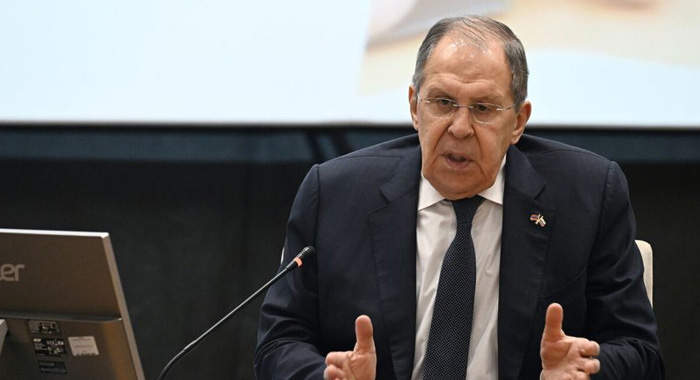
Russian Foreign Minister Sergei Lavrov emphasized that security risks and destabilizing developments in Afghanistan remain a central concern for the Collective Security Treaty Organization (CSTO), amid growing regional threats from militant activity and cross-border instability.
Lavrov made these remarks on Monday during discussions in Moscow with CSTO Secretary General Imangali Tasmagambetov, underscoring the persistent and evolving security challenges faced by member states in the region.
The Foreign Minister highlighted that Afghanistan’s security situation, particularly following the Taliban’s return to power, continues to pose significant risks to Central Asia. He noted that militant activity, the potential spillover of extremism, illegal trafficking, and refugee pressures remain high on the CSTO agenda, threatening the stability and security of neighboring countries.
Lavrov stated that new developments in Afghanistan have heightened regional vulnerability, necessitating increased vigilance and coordinated responses among CSTO members. “Emerging threats linked to instability in Afghanistan and its border regions require continuous monitoring and proactive measures,” he said.
The CSTO, a regional military alliance comprising Russia, Armenia, Belarus, Kazakhstan, Kyrgyzstan, and Tajikistan, has maintained a strong focus on collective defense and border security. Lavrov underscored that CSTO member states have strengthened joint military exercises, intelligence sharing, and border cooperation to counter the potential impact of Afghanistan-linked threats.
He stressed that these measures are essential to safeguard member countries from extremist infiltration, cross-border attacks, and illicit trafficking originating from unstable Afghan territory.
Central Asian states, according to Lavrov, have repeatedly raised concerns about the Taliban’s inability or unwillingness to curb militant networks and maintain order within Afghanistan. He warned that uncontrolled militant movements and extremist networks in Afghan border areas pose an ongoing risk not only to CSTO members but to broader regional peace.
The CSTO continues to closely monitor the situation in Afghanistan, while preparing to respond to evolving threats that may impact regional stability, economic security, and civilian safety across Central Asia.
The discussions highlighted the urgent need for coordinated regional strategies to mitigate risks emanating from Afghanistan, including enhanced intelligence sharing, border security operations, and collective preparedness. CSTO leaders reaffirmed their commitment to ensuring that Taliban-led instability does not compromise the safety and stability of neighboring member states.
The meeting reflects Russia and CSTO’s ongoing vigilance regarding Afghanistan and their determination to prevent the country’s internal chaos from spilling over into the wider region.



