Tirah did not erupt overnight. Its crisis was not sudden, unexpected, or accidental. The displacement, the chaos, the suffering, all of it was visible, predictable, and known well in advance. By October 28, the provincial government was fully aware that residents of Tirah would be forced to descend from their villages. This was not speculation. It was established fact.
Yet when people began arriving, what awaited them was not planning but paralysis.
There were no functional transit camps. No organized reception points. No coherent registration system. Families stood for hours, sometimes days, in long lines without shelter, seating, or clarity. Tokens became a matter of survival rather than administration. People were less concerned about compensation and more anxious about whether their names would even be acknowledged.
This was not a resource problem. It was a governance collapse.
The provincial government had approved nearly Rs4 billion for relief, targeting roughly 19,000 families. Official figures now suggest that around 17,000 families have been relocated, while nearly 2,000 remain stranded, blocked by district administration from descending, despite deteriorating conditions. The contradiction is stark. If relocation is complete, why are families still trapped. If funds were allocated, why are people unpaid.
More troubling are the allegations that tokens were issued to individuals who were not legitimate beneficiaries. If verified, this is not mismanagement. It is theft. Relief money diverted to the undeserving while genuine victims wait in freezing conditions is not a clerical error. It is a moral and administrative failure that shreds whatever credibility the provincial government still claims.
This entire episode demanded focus, urgency, and leadership. Instead, attention drifted elsewhere.
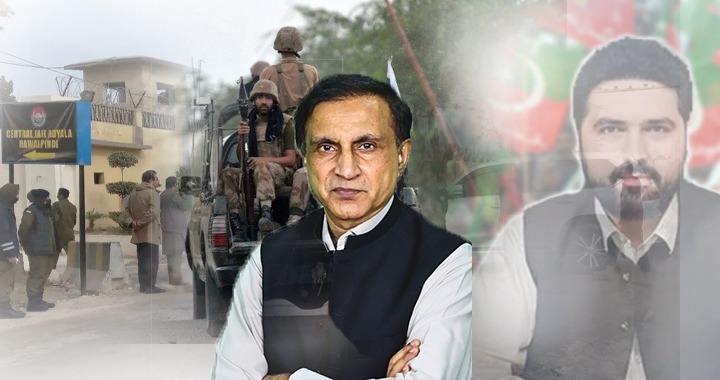
While Tirah struggled, the chief minister of Khyber Pakhtunkhwa chose protest politics over provincial responsibility, decamping to Islamabad to sit outside Adiala Jail. Statements were issued about medical terrorism and injustice, while thousands of his own constituents waited for shelter, registration, and basic relief.
The symbolism is impossible to ignore. A province on pause while its leadership performs agitation.
The protest itself exposed another uncomfortable truth. Despite loud declarations, the turnout was thin. A few dozen people. A handful of MPAs. No meaningful presence from Punjab. Party workers left in the cold, confused, eventually abandoned as the sit-in quietly dissolved. Revolutionary slogans echoed in an almost empty space.
This pattern is familiar. Announcements of nationwide shutdowns, promises to jam the country, all collapsing under the weight of poor organization and absent leadership. Emotional decisions replace planning. Optics substitute governance.
Inside Khyber Pakhtunkhwa, the consequences are already visible. Police operate without confidence in political leadership. Bureaucracy functions independently, unchecked and directionless. Ministers juggle dozens of departments without time, authority, or control. Meetings stop. Decisions stall. Governance drifts.
Nowhere is this dysfunction clearer than in Tirah.
The handling of local jirgas adds another layer of irresponsibility. Community elders who acted as intermediaries between the state and residents are now being exposed, pressured, and politicized. Instead of being protected, they are being pushed forward to issue statements, turning mediators into potential targets. This is not advocacy. It is endangerment.
Weaponizing jirgas to deflect blame is reckless. It hands adversaries names, faces, and vulnerabilities. It shifts responsibility downward to save those at the top.
The most cynical element of this entire saga is the deliberate confusion around security operations. Claims of a large-scale military offensive in Tirah have been amplified, despite repeated clarifications. The reality is far less dramatic and far more inconvenient for political narratives.
There is no full-scale operation underway in Tirah.
What exists are limited intelligence-based operations, the same kind that have been ongoing for years. Even those are now constrained. Heavy snowfall, harsh terrain, and severe weather conditions have effectively slowed movement. The ground reality does not support claims of an active, sweeping offensive.
Facts, however, rarely survive where politics needs spectacle.
Tirah was not abandoned by chance. It was sidelined by choice. Funds disappeared. Planning failed. Responsibility was outsourced to slogans and protests. And when the dust settled, it was snow, not strategy, that finally paused whatever limited security activity existed on the ground.