
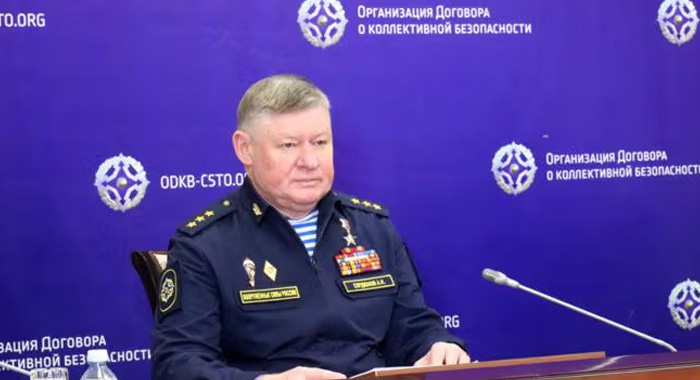
Senior officials of the Collective Security Treaty Organization (CSTO) have raised serious concerns over the growing presence of international extremist and terrorist groups operating in Afghanistan, warning that the situation poses a direct threat to regional stability and the security of neighboring states.
At a press conference on Thursday, Andrey Serdyukov, Chief of the Joint Staff of the Collective Security Treaty Organization, stated that the continued activities of multiple armed groups inside Afghanistan are a source of significant concern for Central Asia. He cautioned that unchecked militant operations could facilitate the spread of terrorism beyond Afghanistan’s borders, undermining regional peace and security.
Serdyukov emphasized that the evolving security landscape requires sustained vigilance and enhanced coordination among CSTO member states to prevent cross-border destabilization. He noted that developments inside Afghanistan remain closely monitored by the alliance’s military and intelligence structures.
Echoing these concerns, Sergei Shoigu, Secretary of Russia’s Security Council, identified the Tajikistan-Afghanistan border as one of the most critical security flashpoints facing the alliance. Shoigu described the southern frontier of CSTO member states—particularly areas adjacent to Afghanistan—as a central focus of the bloc’s security agenda.
“The situation along the Tajikistan-Afghanistan border remains among our top security priorities,” Shoigu stated, highlighting the rising risks associated with cross-border infiltration, armed clashes, and illicit trafficking.
The warnings follow reports indicating that at least 17 armed clashes occurred along the Tajikistan-Afghanistan border over the past year, underscoring the fragility of security conditions in the region. Analysts view these incidents as evidence of mounting pressure on border defenses and the potential spillover of instability.
CSTO officials reiterated their commitment to strengthening collective defense mechanisms, enhancing border security infrastructure, and deepening military cooperation among member states to address emerging threats.
The alliance continues to coordinate with regional governments to monitor developments and implement preventive security measures aimed at containing extremist networks and safeguarding regional stability.



