
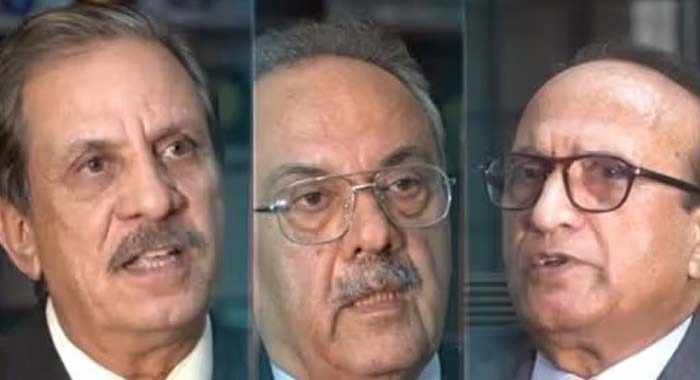
Two former Pakistani diplomats have warned that the Taliban’s governance failures, hard-line policies and growing regional isolation are strengthening internal opposition in Afghanistan and creating conditions that could lead to a political shift in Kabul. Their assessment comes amid worsening Pakistan–Taliban relations, stalled bilateral talks and increasing activity by anti-Taliban armed groups in northern Afghanistan.
Speaking at a panel discussion, Asif Durrani, Pakistan’s former special representative for Afghanistan, said the Taliban’s inability to govern effectively has weakened its grip on power and opened space for armed resistance movements, particularly in Badakhshan and other non-Pashtun northern regions. He said the group has failed across the social, economic and counterterrorism sectors, leaving the country without a functional administrative structure.
Durrani noted that international assessments increasingly describe Tehreek-e-Taliban Pakistan (TTP) as a rising threat to Pakistan and the wider South and Central Asian region, with the group benefiting from what he described as continued support and sanctuary from the Afghan Taliban. He said the Taliban’s refusal to reverse its ban on girls’ and women’s education has deepened its global isolation and further hardened the positions of neighbouring states. He added that emerging anti-Taliban groups are becoming more active and could eventually merge into a broader insurgent front if the current policies continue, though he cautioned that Pakistan must avoid any role in regime change, citing past failures.
Amjad Ali Sher, Pakistan’s former ambassador to Cambodia, told the panel that the National Resistance Front and the Afghanistan Freedom Front, led by Yasin Zia, maintain a presence in northern Afghanistan, with Badakhshan becoming a strategic hub due to its borders with Tajikistan, China and Pakistan. He said attempts to suppress these groups have yielded limited results and warned that efforts aimed at political change in Kabul “will continue and will not stop.”
The discussion follows growing coverage in Pakistani media about Kabul’s political future, particularly after a sharp decline in Pakistan–Taliban relations. Islamabad has stopped referring to the Taliban as the “interim government,” now calling it the “Taliban regime.” Over the past two months, Pakistan has repeatedly criticised the group’s lack of legitimacy and its exclusion of ethnic minorities, women and non-Taliban factions from governance.
Three rounds of Pakistan–Taliban talks have ended without progress. The Taliban rejected Pakistan’s requests for a written pledge to curb cross-border TTP attacks, issue a religious decree against jihad inside Pakistan and hand over key TTP commanders. The Taliban maintain that TTP violence is Pakistan’s internal matter.
As tensions escalated, Pakistan closed key border crossings, prompting the Taliban to suspend trade in response, including halting medicine imports from Pakistan while seeking alternatives from India. Former diplomats, however, argued that India cannot replace Pakistan in Afghan trade due to geography, as Afghanistan and India share no land border and must rely on ports in Pakistan or Iran. While the Taliban are trying to increase reliance on Iran’s Chabahar Port, the facility remains constrained by international sanctions.



