
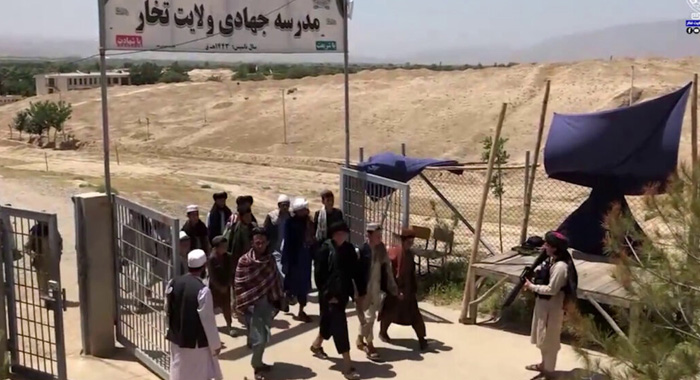
Recent remarks by Taliban chief spokesman Zabihullah Mujahid confirming the operation of more than 20,000 religious schools across Afghanistan enrolling over two million students—have reignited serious regional and international concerns about the true nature and purpose of these institutions.
Speaking at a madrassa in Kandahar, Mujahid described the scale of religious education under Taliban rule as “very large,” noting that all such schools function under the Taliban-controlled Ministry of Education. While the Taliban portray this expansion as an effort to align education with Islamic principles and Afghan traditions, critics argue that the rapid growth of these institutions tells a far more troubling story.
Security analysts and regional observers have long warned that many so-called religious schools in Afghanistan function not merely as centers of theological learning, but as ideological and operational training grounds for militant groups. According to Afghan Taliban’s own admissions, at least one large religious school has been established in every province since their return to power in August 2021 often with capacities exceeding 1,000 students and minimal transparency regarding curricula or oversight.
Of particular concern is the persistent allegation that members of the Tehreek-e-Taliban Pakistan (TTP), a UN-designated terrorist organization, have received ideological indoctrination and militant training in these institutions. Multiple security assessments indicate that fighters trained in Afghanistan-based madrassas have been involved in cross-border terrorist attacks inside Pakistan, directly threatening regional peace and stability.
The accelerated expansion of religious schools has coincided with the systematic closure of girls’ secondary schools and universities, alongside mounting restrictions on modern education. Critics argue that the Taliban are deliberately sidelining science, medicine, engineering, and critical thinking in favor of a rigid, militarized interpretation of religion—one that risks producing generations ill-equipped for peaceful nation-building but susceptible to extremist recruitment.
Local residents and international rights groups warn that this education model deepens radicalization, entrenches gender discrimination, and undermines Afghanistan’s long-term socio-economic prospects. Foreign governments have repeatedly expressed concern that the Taliban’s education policies violate basic human rights and international commitments, while also creating fertile ground for transnational terrorism.
While the Taliban insist their approach reflects religious authenticity, the absence of transparency, continued exclusion of women and girls, and credible links between madrassa networks and militant activity raise urgent questions. For many in the region, the issue is no longer solely about education but about whether Afghanistan’s expanding religious school system is quietly being transformed into a pipeline for extremism with consequences far beyond its borders.



