
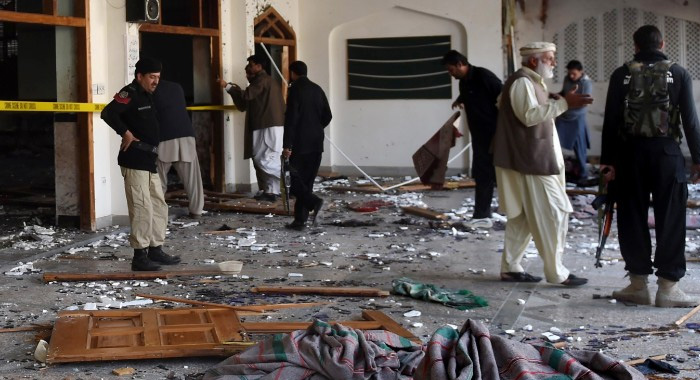
A sharp escalation in militant attacks targeting the police force across southern districts of Khyber Pakhtunkhwa (KP) during the first weeks of the current year has heightened security concerns, with the bombing of an armoured personnel carrier (APC) in Tank standing out as the latest and deadliest incident, claiming the lives of seven police personnel.
Police units in the Dera Ismail Khan and Bannu divisions have come under particularly intense assault, facing a surge in attacks that include IED blasts, targeted killings, ambushes, and coordinated strikes on patrols and convoys. Such violence against police and security personnel has become a persistent pattern since mid-2021, underscoring a deteriorating security environment in the region.
In recent weeks alone, militants have repeatedly targeted police APCs using improvised explosive devices, while off-duty personnel have increasingly been attacked as “soft targets.” Inspector General of Police Zulfiqar Hameed, speaking to media, confirmed that enhanced security measures have been implemented to protect police buildings and installations. However, he acknowledged that attackers have adapted their tactics, shifting focus toward personnel traveling home or visiting public places after duty.
“The situation was discussed in detail with regional police officers, and additional steps are being taken to prevent and counter such attacks,” the IGP said, emphasizing that counterterrorism strategies are being continuously reviewed in light of evolving threats.
According to official statistics, more than 500 police personnel have lost their lives since 2023 in ambushes, targeted killings, IED explosions, and other terror-related incidents. The toll reflects a troubling upward trend: 186 policemen were martyred in 2023, 153 policemen were martyred in 2024, 159 policemen were martyred in 2025, marking a further increase
The frequency of attacks has also risen dramatically. The police force faced 536 attacks during 2025, representing a 48 percent increase compared to 2024. At the same time, security forces successfully thwarted 324 attacks, an 83 percent rise compared to the previous year highlighting both the intensity of the threat and the growing operational response by police.
Despite these efforts, significant resource gaps remain. In many districts, police continue to face shortages of protected infrastructure, bulletproof vehicles, body armor, modern weaponry, and advanced surveillance technology. While authorities report that additional bulletproof vehicles have been deployed and police stations and posts reinforced, officials concede that the needs on the ground remain substantial.
Recent months have seen the introduction of drones, anti-drone guns, thermal imaging scopes, and other advanced equipment to enhance counterterrorism capabilities and track militant movements. These measures aim to improve both defensive readiness and offensive response operations.
The human cost of the conflict has been devastating. Attacks on KP Police intensified after mid-2021, but 2023 marked a tragic peak, particularly with the January 2023 suicide bombing at the Malik Saad Shaheed Police Lines mosque in Peshawar, which killed over 86 policemen and injured more than 200 the deadliest attack on police in Pakistan’s history.
Since 2006, the Khyber Pakhtunkhwa Police have lost more than 2,000 officers, ranging from constables to additional inspectors general, in the line of duty. Between 1970 and 2006, the number of fallen police personnel stood at 369. The worst year on record remains 2009, when 207 policemen including senior officers were martyred in terrorist attacks across the province.
Most recent casualties have been reported from Peshawar, Dera Ismail Khan, Bannu, and Lakki Marwat, districts that remain at the forefront of Pakistan’s ongoing battle against militancy.
As the police force continues to confront unprecedented threats, officials and analysts alike stress that sustained investment in protection, technology, and intelligence-led policing is critical—not only to safeguard those serving on the frontlines, but also to ensure long-term stability and security in Khyber Pakhtunkhwa.



