
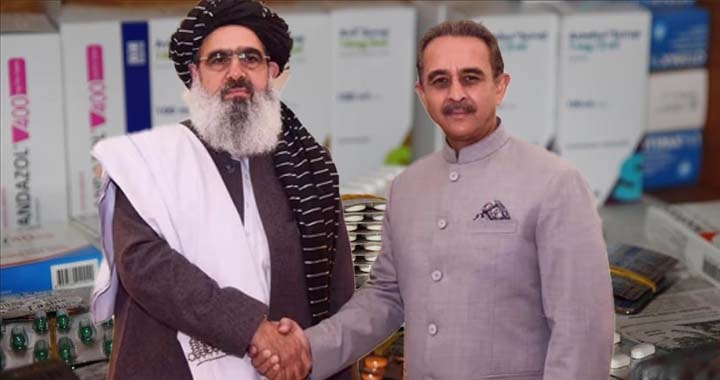
The Afghan Taliban’s recent moves to pivot away from Pakistan for pharmaceutical imports have intensified concerns over regional stability and the economic impact on neighbouring countries, particularly Iran and Pakistan.
During a visit to New Delhi from December 16 to 21, Noor Jalal Jalali, Afghanistan’s minister of public health, held high-level talks with Indian officials, including Kirti Vardhan Singh, to formalize long-term cooperation in health and pharmaceuticals. India has committed to expanding humanitarian and health assistance, setting up cancer treatment centres in Afghanistan, deploying doctors for capacity-building programmes, and establishing a joint working group to coordinate health sector initiatives. According to Jalali, medicines from Pakistan previously accounted for 60 to 70 percent of Afghanistan’s pharmaceutical market, but rising tensions between Islamabad and Kabul have forced the Taliban to diversify suppliers, with India emerging as a primary alternative.
This development coincides with the Taliban’s ban on Pakistani pharmaceutical imports following repeated border clashes and deteriorating bilateral relations. Taliban officials have indicated that Pakistan-made medicines will soon be blocked at Afghan ports, signalling a formal move to reduce reliance on their western neighbour.
Iran’s Growing Concerns
Meanwhile, Iran has raised alarms over the smuggling of medicines into Afghanistan, warning that its domestic pharmaceutical supply is under increasing strain. Mohsen Abdollahzadeh, a board member of Iran’s Association of Pharmaceutical Distributors, stated that despite a 50 percent increase in domestic production, smuggling into Afghanistan and Iraq is contributing to shortages, and could destabilise Iran’s pharmaceutical market if allowed to continue. Mohammad Hashemi, spokesperson for Iran’s Food and Drug Administration, also acknowledged the risk of temporary shortages due to price-driven smuggling, though he emphasised that official channels for legal exports to Afghanistan are being expanded in coordination with the Taliban.
Regional and Global Implications
The Taliban’s recalibration of Afghanistan’s pharmaceutical sources carries wider geopolitical consequences. By formally reducing Pakistan’s role in medical supplies while increasing dependence on India, the interim Afghan administration risks exacerbating tensions along its western and eastern borders. Pakistan has already accused elements within Kabul of acting as proxies for India, a charge that gains traction amid rising cross-border incidents.
From Iran’s perspective, the growing diversion of medicines to Afghanistan via informal channels threatens domestic supply chains and undermines regional health security. Iran’s concerns underscore how the Taliban’s unilateral decisions—whether on border management or trade—can ripple far beyond Afghanistan, affecting neighbours and global humanitarian calculations.
The pivot towards India, while filling immediate medical gaps, raises questions about Kabul’s understanding of the broader repercussions of its policies. By sidelining Pakistan and complicating relations with Iran, the Taliban may inadvertently fuel regional instability, strain bilateral ties, and invite external actors into Afghanistan’s internal economic and political affairs.
The Afghan Taliban’s handling of pharmaceutical trade exemplifies a broader pattern of policy choices that prioritise short-term gains over regional stability. Their growing engagement with India and restrictive stance toward Pakistan, combined with the unintended pressure on Iran’s drug supply, highlights the need for Kabul to consider the wider geopolitical and humanitarian consequences of its decisions. Regional actors, including Pakistan and Iran, face mounting challenges, while the international community watches closely for how Afghanistan’s interim administration navigates the delicate balance of neighbourly relations, trade, and public health.



