
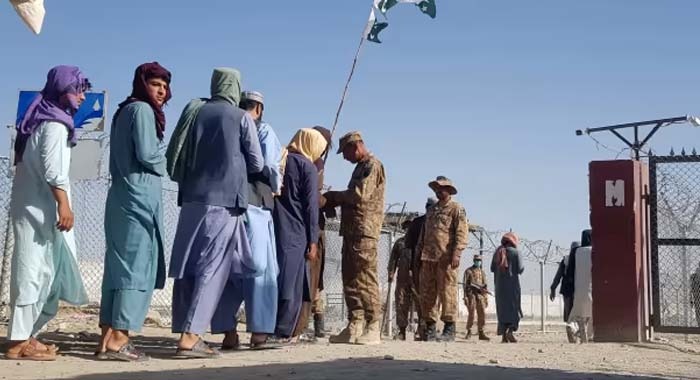
Afghanistan’s ongoing political stagnation and exclusionary governance are creating a fertile ground for radicalization, with Pakistan emerging as the immediate frontline of its consequences. Experts warn that the ideological vacuum left by weak institutions and rigid, exclusionary policies is being systematically exploited by extremist networks to produce a steady pipeline of radicalized individuals.
The banned Tehreek-e-Taliban Pakistan (TTP), Balochistan Liberation Army (BLA), and other militant factions operate across Afghan territory, not just hiding in ungoverned areas but actively recruiting, indoctrinating, and training new cadres. These networks leverage both traditional methods, including madrassas and community influence, and digital platforms for propaganda and recruitment, producing militants whose reach extends beyond Afghanistan’s borders.
Security analysts note that this pipeline is structurally reinforced by local governance failures. Marginalized populations, especially youth excluded from education and employment, are highly susceptible to extremist messaging. Restrictions on women’s participation further erode human capital, leaving entire communities vulnerable to ideological exploitation. For Pakistan, the immediate risk lies in cross-border infiltration, while the long-term threat is the spread of extremist narratives that can radicalize homegrown populations.
The operational sophistication of these networks is growing. Militant groups combine ideological indoctrination with practical training in weapons, explosives, and logistics. Safe havens across Afghanistan allow these networks to operate with minimal interference, making containment increasingly difficult for Pakistan’s security forces. Analysts argue that understanding the radicalization pipeline requires more than military intelligence—it demands a focus on social structures, education, and counter-narratives that can disrupt extremist recruitment before it manifests as violence.
Regional intelligence collaboration has become critical. Pakistan must work closely with international partners to monitor and counter ideological exports, while simultaneously investing in community-level interventions to reduce susceptibility to radicalization. Failure to engage with the pipeline’s root causes risks not just cross-border attacks, but also the entrenchment of extremist ideology within local populations, creating a generational security challenge.
The Afghan radicalization pipeline underscores a systemic reality: instability does not merely manifest as sporadic violence. It is an ongoing process that shapes beliefs, behaviors, and networks capable of transcending borders. Pakistan, positioned next to Afghanistan, faces the dual task of disrupting immediate threats while addressing the long-term spread of extremist ideology to safeguard both national and regional security.



