
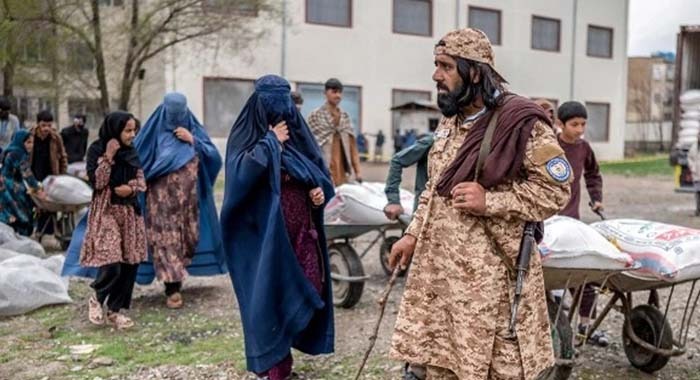
Serious allegations of corruption have once again emerged against the Taliban authorities in Afghanistan, raising grave concerns about the misuse of international humanitarian assistance intended for the country’s most vulnerable populations. According to Afghan media reports, a significant portion of aid supplies meant for impoverished civilians has allegedly been diverted by Taliban officials, while ordinary Afghans continue to face acute hunger, poverty, and economic distress.
A recent investigative report published by the Afghan newspaper Hasht-e Subh reveals that in the northern province of Kunduz, Taliban authorities reportedly seized nearly half of the humanitarian aid allocated for deserving beneficiaries. The aid packages in question were provided by the Saudi King Salman Humanitarian Aid and Relief Center, a prominent international donor engaged in relief efforts for Afghan communities affected by ongoing economic and humanitarian crises.
The report states that instead of ensuring transparent and equitable distribution, Taliban officials allegedly retained a substantial portion of the relief supplies for their own use. As a result, many needy families reportedly received incomplete aid packages or were excluded altogether. These developments come at a time when millions of Afghans are struggling with food insecurity, malnutrition, and the collapse of basic livelihoods.
Local media sources further indicate that the Taliban administration has failed to adequately prioritize the fundamental needs of the population, including access to food, healthcare, and essential services. The alleged diversion of humanitarian aid has exacerbated public suffering and deepened mistrust among communities that rely heavily on international assistance for survival.
Concerns regarding the Taliban’s handling of foreign aid are not new. International and domestic observers have repeatedly warned of systemic corruption, lack of oversight, and political interference in aid distribution mechanisms since the group assumed power in August 2021. Multiple reports by the U.S. Special Inspector General for Afghanistan Reconstruction (SIGAR) have highlighted persistent risks of corruption, diversion, and manipulation of humanitarian assistance under Taliban control.
SIGAR has previously cautioned that the absence of transparent governance structures and accountability mechanisms significantly increases the likelihood that aid resources will be misused or exploited by authorities. These warnings have prompted international donors and humanitarian organizations to reassess delivery methods, often opting for indirect channels to minimize the risk of diversion.
Humanitarian agencies and rights advocates stress that any misuse of aid not only violates international norms but also undermines global relief efforts aimed at preventing famine and humanitarian collapse in Afghanistan. They have called for stronger monitoring, independent verification processes, and safeguards to ensure that assistance reaches its intended recipients without interference.
As Afghanistan continues to grapple with one of the world’s most severe humanitarian crises, renewed allegations of aid misappropriation underscore the urgent need for accountability, transparency, and international vigilance. Ensuring that humanitarian assistance reaches the Afghan people rather than being absorbed by those in power remains a critical challenge for the global community.



