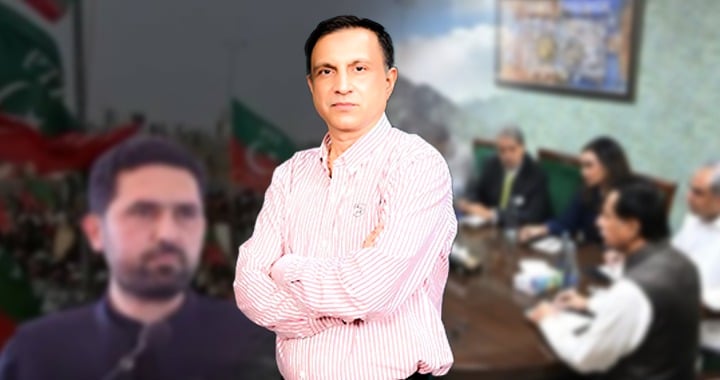
The growing wave of terrorist attacks in Khyber Pakhtunkhwa has raised serious questions about the provincial government’s priorities, particularly as Chief Minister Sohail Afridi remains focused on political mobilization and the PTI’s long march. While police personnel and other law enforcement officials continue to pay the price in the fight against terrorism, the government appears increasingly detached from the province’s worsening security and governance challenges.
The PTI’s political activities have continued across the province, but the security situation has deteriorated. There were concerns that terrorists might target the march itself, given the areas through which it was travelling. Fortunately, no such attack took place. However, the absence of an attack on the procession does not mean that the threat has diminished.
In fact, targeted killings of police personnel and other security-related attacks have continued in several districts. The banned Tehreek-e-Taliban Pakistan (TTP), the Islamic State group, and other terrorist organizations have employed different tactics, ranging from targeted shootings to improvised explosive device attacks and suicide bombings. Recent incidents have included attacks on Federal Board of Revenue and Customs personnel accompanied by police in Dera Ismail Khan, the killing of a station house officer and his gunman in Karak, an attack on a police post in Kohat that claimed the lives of seven personnel, the killing of a police officer in Tank, and another police fatality reported in Khyber district. Three police personnel were also reportedly abducted in Nowshera.
These incidents demonstrate that police personnel remain a principal target of terrorist groups. Officers in uniform, traffic police personnel, and officials deployed along roads are particularly vulnerable because their presence is visible and their duties often require them to remain exposed. Terrorists can approach them on motorcycles or in vehicles, open fire, and flee before an effective response can be mounted.
The police are already burdened with the responsibility of maintaining law and order in conflict-affected districts. During the PTI’s march, they have also had to provide security for political gatherings and processions travelling through areas where terrorist networks remain active. This places an additional burden on an already stretched force.
There is another troubling dimension to the situation. Opposition parties have repeatedly complained that they cannot hold public gatherings in certain areas because of security threats. Yet the PTI procession has travelled through several of these districts with relative ease. This contrast has prompted questions about whether security risks are being assessed and addressed consistently across political parties.
The procession itself has also differed from what is traditionally understood as a long march. Participants gather at one location, travel to the next, and are often replaced by new groups at subsequent stops. Rather than building steadily in numbers as it advances, the gathering appears to fluctuate from district to district. This raises questions about both the scale of public support and the political objectives behind the exercise.
Meanwhile, the provincial government has appeared preoccupied with political activity rather than governance. For roughly the past week or more, PTI leaders have been engaged in political mobilization in different cities, while the province continues to face serious law-and-order challenges. Before this, similar political activity had also taken place in Lahore and Karachi. The central question is why the provincial administration is not giving the same urgency to its responsibilities within Khyber Pakhtunkhwa.
The provincial government’s priorities become even more questionable when the conduct of the chief minister is examined. When Sohail Afridi was nominated for the office, he made statements emphasizing his personal devotion to Imran Khan. However, becoming chief minister requires more than political loyalty. The office carries constitutional responsibilities, including addressing public grievances, maintaining law and order, improving public services, and ensuring that the administration functions effectively.
A chief minister cannot govern a province through emotional speeches and confrontational rhetoric alone. Statements describing counterterrorism efforts as a “dollar war” or an imposed conflict, or suggesting that no one can conduct an operation without his permission, do little to address the realities facing police personnel and residents of affected districts. Such language may appeal to political supporters, but it is not a substitute for a workable security policy.
Political leaders must distinguish between campaigning and governing. In opposition, they can use provocative language to criticize their rivals. In government, however, their words carry institutional consequences. Inexperience and emotionalism may be tolerated in student politics, but they cannot become the guiding principles of a provincial administration.
A Province Struggling With Governance and Economic Hardship
The security crisis is only one part of Khyber Pakhtunkhwa’s wider problems. Hospitals have faced strikes, universities are struggling with financial shortages, and questions have been raised about the availability of money for salaries and pensions. Poverty and unemployment continue to weigh heavily on households, while young people increasingly struggle to find work.
The province’s industrial base has also weakened considerably. When industries close and investment declines, employment opportunities disappear. Tourism, another potential source of income and jobs, cannot flourish when security concerns discourage visitors from travelling to the province.
The government must therefore explain how it intends to generate employment and improve living standards when both security and economic conditions remain under pressure. Electricity and gas shortages present additional challenges, some of which require federal cooperation. But the provincial administration can still improve the delivery of public services and make everyday interactions with government departments less burdensome.
Residents continue to face long queues and delays at public offices, including the Peshawar education board and deputy commissioner’s offices. These are problems that demand administrative attention. People should not have to spend entire days visiting government departments to obtain routine services.
At the same time, allegations of corruption, commissions, irregularities in public procurement, and favoritism in the award of contracts have raised further concerns about governance. Questions have also emerged about the handling of health-sector projects and development schemes supported by international financial institutions, including the World Bank and the Asian Development Bank.
Such allegations require transparent investigation rather than political dismissal. It is the government’s responsibility to ensure that procurement procedures are fair, public funds are used properly, and officials are held accountable for wrongdoing. When allegations of irregularities repeatedly emerge, the administration must demonstrate that effective oversight mechanisms are in place.
The combination of deteriorating security, weak public services, unemployment, and alleged corruption leaves citizens facing multiple hardships at once. People already worried about terrorism should not also have to contend with an administration that appears unable to address their basic needs.
This is also an important reason for the limited public enthusiasm surrounding the PTI’s current political mobilization. People have household expenses to meet, children to educate, and livelihoods to protect. They cannot be expected to abandon these responsibilities simply because a political party announces another march.
The PTI leadership has made ambitious claims about the numbers it expects to bring onto the streets. At various points, figures running into millions have been mentioned. Yet the gatherings witnessed along the route have appeared considerably smaller than those projections. Participants gather at one stop, while many do not continue to the next, and local supporters join at subsequent destinations.
Even in a populous city such as Peshawar, the turnout has not appeared to match the extraordinary numbers claimed by the leadership. This gap between political expectations and visible participation suggests that public support should not be taken for granted.
People may attend a local gathering to listen to speeches, meet friends, or take a break from their daily routines. That does not necessarily mean they are prepared to travel to Islamabad or participate in a prolonged confrontation. The willingness to attend a local political event and the willingness to undertake a long march are two very different things.
The public’s immediate concerns are more practical: security, jobs, affordable living, functional hospitals, education, and accountable administration. Unless a political party can demonstrate that its activities will help address these problems, it should not expect people to participate in large numbers merely on the strength of slogans.
Is the Long March About Reaching Islamabad?
The PTI’s shifting schedule also raises questions about the actual purpose of the march. The announcement came well before the procession began, yet the movement has progressed through a series of district-level stops rather than advancing directly towards its declared destination.
One possible explanation is that the provincial leadership hopes to buy time and create an opportunity for negotiations with the federal government. By prolonging the process, it may be seeking to persuade Islamabad to accept some of its demands. However, the extended schedule and repeated changes in the route have made it difficult to determine whether reaching the federal capital is the immediate objective.
There is another political consideration. Sohail Afridi faces legal cases and possible court decisions that could affect his political future. These include proceedings related to May 9, a case involving remarks attributed to him about the Election Commission during the Haripur election, and other legal matters. The precise consequences will depend on the outcomes of those proceedings, but the cases have added uncertainty to his position.
It is possible that the chief minister sees political mobilization as a way to strengthen his position or establish himself as a prominent party figure regardless of what happens to his office. Some politicians may calculate that a confrontation with the federal government could help them portray themselves as victims of political pressure.
However, such a strategy carries risks. A chief minister’s responsibility is not simply to protect his political standing. He must also ensure that the provincial administration remains functional and that citizens are not left exposed to security threats while political leaders pursue their own objectives.
If the PTI intends to reach Islamabad, it needs a credible plan, sustained public participation, and a clear explanation of its demands. If the procession instead stops in Swabi or another district, the party will need to explain what it has achieved through the exercise and how the prolonged mobilization has served the interests of the people of Khyber Pakhtunkhwa.
The gap between the leadership’s claims of enormous public support and the numbers visible at successive stops is particularly significant. Political parties can announce ambitious targets, but public participation ultimately determines whether a movement has the strength to sustain its objectives.
Afridi’s Future and the Question of Political Stability
The chief minister’s position may also be affected by developments within his own party. Reports of differences among PTI lawmakers, including the existence of a group of dissatisfied members, suggest that internal political calculations could become important in determining the government’s future.
If some lawmakers conclude that a change in leadership would help preserve the provincial government, they may consider alternatives. The absence of certain dissatisfied members from the march could become politically significant if their differences with the leadership deepen. However, their intentions and any eventual decision would need to be established through concrete developments rather than speculation.
The possibility of constitutional measures, including governor’s rule or an emergency, has also entered the political debate. Such steps would carry serious constitutional and political implications and cannot be treated as inevitable. Any action would have to be assessed against the applicable constitutional requirements and the circumstances at the time.
What is clear, however, is that the provincial government faces a serious test of its administrative capacity. Reports of public representatives and provincial officials being abducted have added to concerns about the state’s ability to maintain order. When even government figures cannot be assured of their safety, citizens have legitimate reasons to question the effectiveness of the administration.
The chief minister may be able to deliver speeches and lead political gatherings, but the real test of leadership is whether the government can protect people, keep public institutions functioning, and respond to the problems confronting the province.
Khyber Pakhtunkhwa cannot afford to have its political leadership consumed by a permanent campaign while police personnel confront terrorists, universities struggle with funding, hospitals face disruption, and families grapple with unemployment and poverty.
The PTI has every right to pursue its political objectives within the law. But the provincial government must not confuse party mobilization with governance. Its first responsibility is to the people of Khyber Pakhtunkhwa, not to the demands of an endless political contest.
The question facing the province is therefore not simply whether Sohail Afridi’s march will reach Islamabad. It is whether his government can demonstrate that it is capable of governing the province while confronting terrorism, economic hardship, and declining public confidence. Until those responsibilities receive the attention they deserve, political rallies will remain a poor substitute for effective governance.