
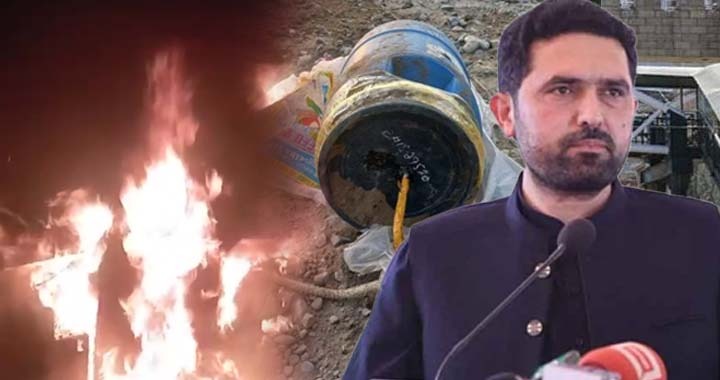
The recent arson attack on a private contractor’s camp in Bannu, following extortion demands by Fitna al‑Khwarij, underscores the structural governance failures of the PTI-led Khyber Pakhtunkhwa government under Chief Minister Sohail Afridi. Ordinary citizens, development workers, and contractors are paying a heavy price for these lapses, which analysts say are part of a wider pattern of militant exploitation of administrative gaps.
In the Dwa Manzi area, militants systematically destroyed cranes, dumpers, excavators, generators, and other heavy machinery at a private company working on the Bannu Circular Road. Sources said the attack was in retaliation for the contractor’s refusal to pay extortion, highlighting a direct link between militant operations and weak enforcement of law and order.
This incident is not isolated. Over the past few days, Bannu Division has witnessed a series of militant strikes, with a bridge in North Waziristan destroyed three to four days ago, disconnecting thousands of Kabul Khel tribe members. Yesterday, militants torched contractor machinery in Bannu, while security forces foiled a major terror plot in Baka Khel Ahmadzai by neutralizing a large quantity of explosives on a main road. Each case demonstrates a pattern of militants targeting both civilian infrastructure and economic activity, exploiting the absence of effective provincial oversight and security enforcement. Observers note that while the federal government and security forces have made tactical interventions, the provincial administration remains largely absent, failing to coordinate protection for critical development initiatives or the communities they affect.
Security officials have also pointed to the gap in implementing the National Action Plan (NAP) in Khyber Pakhtunkhwa. While Balochistan has applied the NAP with verifiable improvements in its security landscape, KP under PTI continues a contradictory, anti-counterterrorism approach, resisting strategies and policing frameworks unanimously approved and supported by all other stakeholders.
The broader impact on Khyber Pakhtunkhwa’s population is tangible. Beyond financial losses suffered by contractors, ordinary citizens face disruptions to transportation, utilities, and public infrastructure. Schools, roads, and other development projects remain vulnerable, while communities bear the direct brunt of violence, displacement, and fear.
Analysts argue that the PTI KP government’s political priorities — including sustained confrontation with federal institutions and focus on party leadership issues — have diverted attention from the province’s deteriorating security situation. This governance vacuum has allowed militants to operate with relative impunity, turning extortion, sabotage, and intimidation into effective instruments of control.
The Bannu incidents also highlight a strategic dimension for Fitna al‑Khwarij: attacks on development projects undermine state authority, deter private investment, and create a climate of economic paralysis, further eroding public confidence in provincial leadership. Every destroyed crane, torched generator, or delayed road signals not only material loss but a psychological victory for militants.
Security officials emphasize that sustained operations, public cooperation, and intelligence-led interventions remain critical to countering these threats. However, analysts caution that without significant improvement in governance, political will, and presence of the provincial administration — especially in CM Afridi’s home districts — the public and development sectors will remain vulnerable to repeated exploitation.
In short, Bannu’s recurring incidents of extortion-driven arson and sabotage, compounded by weak provincial governance and NAP implementation gaps, serve as a stark example of how militant aggression and administrative inaction impose both economic and societal penalties on the people of Khyber Pakhtunkhwa.



