
Prime Minister Shehbaz Sharif on Wednesday underscored that an effective and capable civil administration is central to Pakistan’s fight against terrorism, stressing that without a functional state machinery, counterterrorism policies cannot translate into results on the ground.
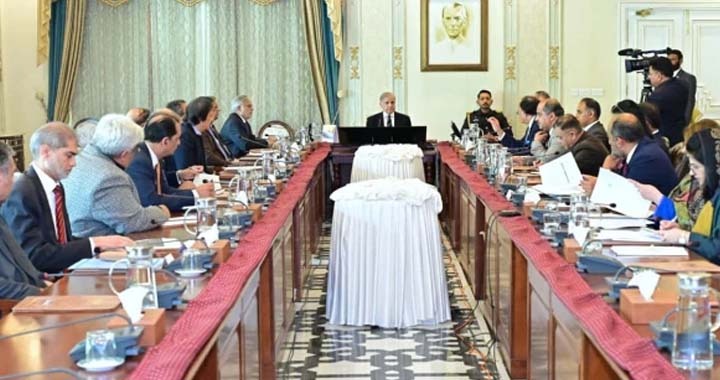
According to a statement from the Prime Minister’s Office, Shehbaz Sharif chaired a high-level meeting to review progress on civil service restructuring, linking institutional efficiency directly to internal security, law enforcement coordination, and public protection.
The prime minister said that terrorism thrives where governance is weak and accountability is absent, adding that strengthening the state’s administrative backbone is essential for ensuring effective implementation of counterterrorism measures and public safety policies.
He directed the relevant committee to recommend a performance-based system for evaluating senior officers, including federal secretaries, with promotions and benefits tied to measurable outcomes. Officials demonstrating competence and effectiveness, particularly in service delivery and security-related governance, should be recognized, he said.
Shehbaz Sharif noted that counterterrorism is not fought by security forces alone but requires a responsive civil administration capable of enforcing writ, supporting law enforcement agencies, and ensuring coordination across institutions. Aligning Pakistan’s civil service with international standards, he said, was necessary to meet contemporary security challenges.
He further stressed that meaningful consultation with all stakeholders, including provincial administrations, was critical to ensuring that reforms strengthen the state’s capacity to respond to terrorism and extremism.
The prime minister instructed the committee to submit practical and sustainable recommendations that enhance governance efficiency and contribute to long-term internal security and stability.
Earlier, the committee briefed the prime minister on consultations held so far and progress made on institutional recommendations.
The meeting was attended by Deputy Prime Minister and Foreign Minister Ishaq Dar, Finance Minister Muhammad Aurangzeb, Planning Minister Ahsan Iqbal, Climate Change Minister Musadik Malik, Law Minister Azam Nazeer Tarar, Economic Affairs Minister Ahad Khan Cheema, Special Assistant to the Prime Minister Haroon Akhtar, provincial chief secretaries, and senior officials.



