
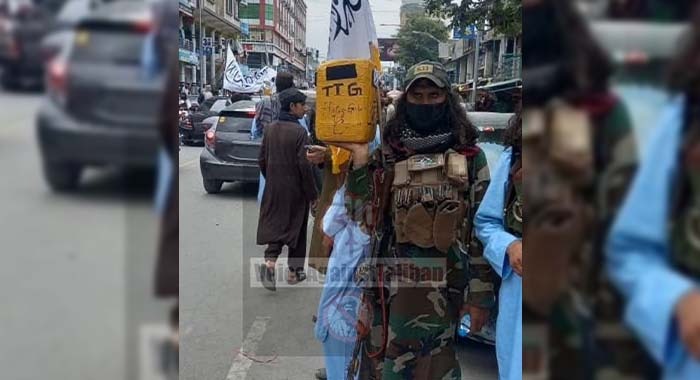
A fresh piece of visual evidence has surfaced indicating open support for banned terrorist organizations within Taliban-controlled Afghanistan, raising serious concerns about the presence and protection of militant groups under the Afghan Taliban’s watch.
A photograph circulating on social media shows a member of the Afghan Taliban’s security forces holding a mock improvised explosive device (IED) bearing inscriptions glorifying and supporting the proscribed Tehreek-e-Taliban Gul Bahadur (TTG) group. The image is being viewed by security analysts as a clear manifestation of ideological alignment and sympathy between Afghan Taliban elements and banned militant outfits.
Observers say the image removes lingering doubts about the continued presence of outlawed terrorist organizations in Afghanistan and the patronage they appear to enjoy from within the Taliban’s security structure.
This visual evidence has emerged against the backdrop of growing reports pointing to the open movement of Tehreek-e-Taliban Pakistan (TTP) militants across Afghanistan. In a recent incident, local sources in northern Afghanistan reported that an unregistered vehicle bearing TTP markings was seen moving freely in Mazar-e-Sharif, the capital of Balkh province. The vehicle reportedly carried five armed men who were openly patrolling the area without interference.
Security analysts note that such incidents directly contradict repeated assurances by the Afghan Taliban that Afghan territory is not being used for militancy against neighboring countries, particularly Pakistan. The ability of militants to operate openly in urban centers is widely viewed as evidence of tolerance, protection, or a deliberate lack of action by the interim Afghan authorities.
Multiple security assessments have previously indicated that the Afghan Taliban provide safe havens, logistical space, and operational freedom to the banned TTP. Reports have also pointed to the existence of shared training facilities and recruitment networks involving TTP and Al-Qaeda across several Afghan provinces.
Pakistan’s security agencies have consistently stated that many terrorists killed in recent counterterrorism operations inside Pakistan were later identified as Afghan nationals, reinforcing claims that militant infrastructure across the border remains intact and active.
Despite Islamabad’s repeated diplomatic engagements and calls for decisive action, the Afghan Taliban have continued to deny allegations of hosting or facilitating terrorist groups. However, analysts warn that the growing body of visual, intelligence, and ground-level evidence is steadily eroding the credibility of these denials.
As militant violence persists inside Pakistan, security experts caution that continued denial or inaction by the Afghan Taliban could further destabilize regional security and deepen mistrust between Kabul and Islamabad.



