
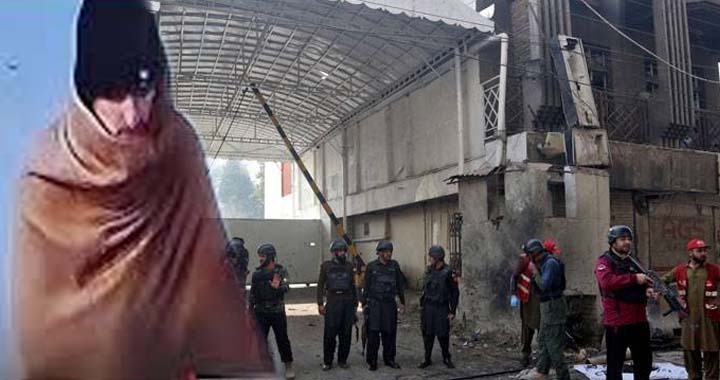
Investigators have identified the organised terrorist network behind the suicide attack on the Federal Constabulary Headquarters in Peshawar, concluding that the assault was the outcome of coordinated planning, local facilitation and links to a banned militant outfit.
According to investigation officials, the suicide bombers involved in the November 24 attack belonged to a proscribed terrorist organisation and had stayed in Peshawar for several days before carrying out the assault. During this period, they familiarised themselves with key routes in the city and received logistical support, including accommodation and suicide jackets, pointing to the presence of an active facilitation network.
Officials say the planning of the attack was conducted under a structured network rather than through isolated actors. So far, more than 150 individuals have been interrogated in connection with the case, while the process of tracing facilitators, handlers and wider linkages remains ongoing.
The attack targeted the FC Headquarters during a morning parade, when around 450 personnel were present. One suicide bomber approached the main gate on foot from the cantonment side and detonated his explosive vest at approximately 8:11 am, martyring three FC personnel. Despite the intensity of the blast, reinforced security barriers prevented the attackers from breaching deeper into the compound.
Moments later, two additional suicide attackers armed with rifles and hand grenades attempted to enter through a side gate. FC personnel responded swiftly, engaging the attackers within 30 to 40 metres of the entrance and killing both before they could detonate their explosive vests or take hostages inside the facility.
Subsequent investigations confirmed that all three attackers were Afghan nationals, a finding verified through forensic, intelligence and NADRA assessments. Surveillance footage recovered during the probe traced the attackers’ movement from the Rahman Baba Cemetery area to the FC Headquarters, providing key leads for investigators. Authorities noted that none of the attackers used mobile phones on the day of the assault, complicating efforts to track their communications.
A detailed report by the Bomb Disposal Unit later revealed that the attackers used approximately 20 kilograms of explosives, split between the front and back of suicide jackets. The recovered material included hand grenades, ball bearings and primacord, indicating a high level of technical sophistication. The BDU assessed that the blast radius could have extended up to 30 metres, underlining the potentially catastrophic scale of the planned attack.
In addition to the three martyred FC personnel, five others were injured, along with eight civilians present near the site. Authorities say the timely response by security forces prevented far greater casualties.
In the days following the attack, security across Peshawar’s Red Zone was significantly tightened. A high-level meeting chaired by the Khyber Pakhtunkhwa Inspector General of Police ordered a full security audit of sensitive installations, intensified monitoring of entry and exit points, enhanced vehicle checks and the deployment of walk-through gates, sniffer dogs and specialised personnel.
Investigators continue to expand the probe to dismantle the full network behind the attack, focusing on facilitators, cross-border linkages and funding channels. Officials say the case highlights a shift in militant tactics toward high-profile urban targets and reinforces concerns that organised terrorist networks retain the capability to plan and execute complex attacks in major cities.
Authorities have reiterated their commitment to pursuing all individuals involved in the planning and facilitation of the Peshawar FC Headquarters attack, stressing that dismantling these networks remains central to preventing future assaults on law enforcement and critical installations.



