
Pakistan has emphasized the urgent need for a permanent and sustainable resolution to ongoing regional tensions, highlighting diplomacy and negotiations as the only effective pathway to peace. The Ministry of Foreign Affairs reiterated that Pakistan remains fully committed to fostering regional stability through active engagement with international partners.
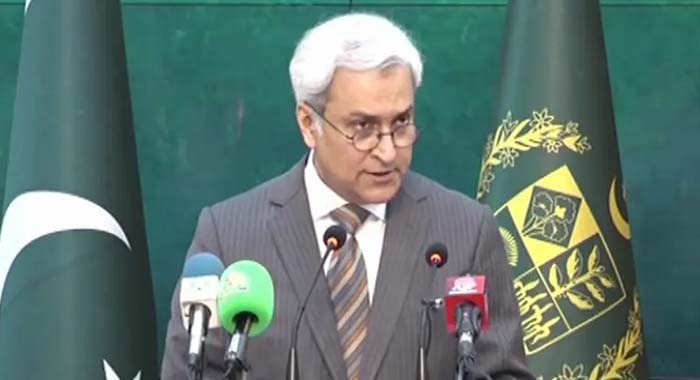
In a weekly briefing, Foreign Office Spokesperson Tahir Hussain Andarabi stated that the Prime Minister and Deputy Prime Minister have been in contact with their counterparts in multiple countries to reinforce Pakistan’s proactive role in promoting peace in the region. Recent visits by foreign ministers from Saudi Arabia, Egypt, and Turkey further underscore Pakistan’s efforts to engage constructively with key regional actors.
The Foreign Office confirmed that Pakistan and the Afghan Taliban are engaged in ongoing talks in China, with a Pakistani delegation currently in Urumqi. The discussions aim to curb terrorism emanating from within Afghanistan and address cross-border security concerns. The spokesperson emphasized Pakistan’s consistent stance: the country has never shied away from dialogue and continues to coordinate with China to advance regional peace initiatives.
Pakistan also hosted consultations among four countries’ foreign ministers, focused on exploring avenues for an immediate cessation of hostilities and long-term conflict resolution. Officials highlighted that ongoing conflicts are inflicting severe humanitarian and economic consequences across the region and globally. The ministers stressed the importance of creating a conducive environment for negotiations, de-escalating military tensions, and promoting cooperative efforts among member states.
Deputy Prime Minister and Foreign Minister Senator Mohammad Ishaq Dar’s recent visit to China was a major diplomatic milestone. Hosted by Chinese Foreign Minister Wang Yi, the visit involved in-depth discussions on bilateral relations, regional stability, and global issues of mutual concern. Pakistan presented a comprehensive five-point peace plan, emphasizing:
- Immediate ceasefire and cessation of hostilities.
- Prevention of conflict escalation and cross-border tensions.
- Unimpeded humanitarian assistance to affected regions.
- Respect for the sovereignty and territorial integrity of all nations.
- Protection of civilians and non-military infrastructure in compliance with international law and the UN Charter.
The plan also highlights the protection of maritime navigation in the Strait of Hormuz, ensuring safe passage for commercial vessels and crew, a critical step for regional trade and stability.
Prime Minister Shehbaz Sharif has engaged with global leaders, including the European Council President, the Iranian President, the Kuwaiti Crown Prince, and regional ministers, to secure support for diplomatic efforts aimed at reducing tensions. The spokesperson noted that Iran has approved the passage of 20 additional Pakistani-flagged vessels through the Strait of Hormuz, signaling growing confidence in Pakistan’s role as a regional mediator.
Pakistan has also secured backing from the United Nations and key countries including Turkey, Qatar, Indonesia, and Iran for its mediation efforts. Deputy Prime Minister Ishaq Dar held discussions with UN Secretary-General António Guterres, emphasizing the importance of dialogue and diplomatic solutions for sustainable regional peace. Secretary-General Guterres expressed full support for Pakistan’s initiatives.
In a recent joint statement, foreign ministers from Pakistan, Egypt, Jordan, UAE, Indonesia, Turkey, Saudi Arabia, and Qatar condemned Israel’s restrictions on Muslim and Christian worshippers in Jerusalem. The statement called for the protection of the historic and legal status of sacred sites and urged the international community to uphold religious freedom, reinforcing Pakistan’s commitment to human rights and regional stability.
The Foreign Office affirmed that Pakistan remains an active and constructive player on the global stage, tirelessly engaging in diplomatic efforts to resolve conflicts, protect civilian lives, and promote regional peace and stability through dialogue, cooperation, and multilateral engagement.



