
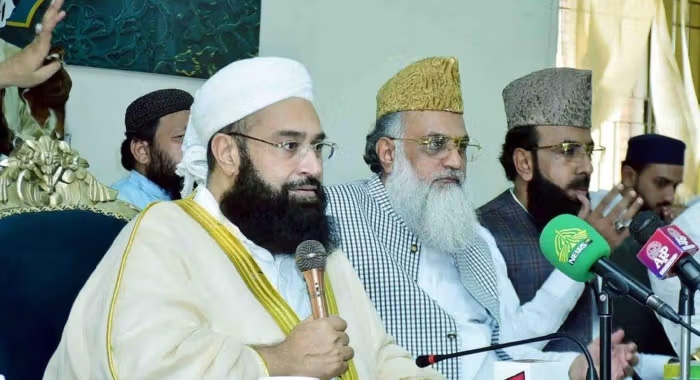
The Pakistan Ulema Council has expressed strong concerns over the Taliban’s recently endorsed penal code, stating that it is not based on authentic Islamic teachings and contradicts the principles outlined in the Quran and Sunnah. In a statement released on Sunday, January 25, the council described the code as offensive to human dignity and not reflective of genuine Islamic law.
The council highlighted that certain provisions of the penal code, rather than adhering to Islamic jurisprudence, appear to resemble non-Islamic, including Hindu, practices, though the statement did not provide detailed comparisons. It also expressed deep concern over measures within the code that appear to divide society into categories of “slaves” and “free people,” calling this classification deeply troubling and inconsistent with the values of justice and equality central to Islam.
The Pakistan Ulema Council urged the Taliban administration, which presents itself as a legitimate Islamic government, to clarify its legal and religious position to the international community. The council emphasized that the Taliban must avoid reimposing laws or social practices from pre-Islamic eras under the banner of Islamic governance.
The Taliban leader, Hibatullah Akhundzada, recently endorsed the penal code, which consists of 10 chapters and 119 articles. Following its approval, the code has been disseminated across provinces for implementation within Taliban judicial institutions. According to Taliban officials, the code serves as the legal framework for judicial rulings in courts operating under their administration.
A spokesperson for the Taliban Supreme Court, Abdul Rahim Rashid, confirmed that the code allows for different punishments for discretionary crimes depending on social classification, though he noted that this distinction does not apply in cases involving retribution punishments. Some provisions of the code also state that Muslims who witness a “sin” being committed may take action against those involved. Taliban authorities maintain that the code reflects their interpretation of Islamic law.
The newly endorsed penal code represents the first formal approval of the Taliban’s judicial rules, signed and validated by their leader as an official legal document. The Pakistan Ulema Council’s statement underscores growing concerns about the alignment of the code with internationally recognized principles of human dignity and justice, as well as authentic Islamic teachings.
The council’s criticism reflects broader apprehensions among scholars and the international community regarding the potential social and legal impact of the code on Afghan society and its citizens.



