
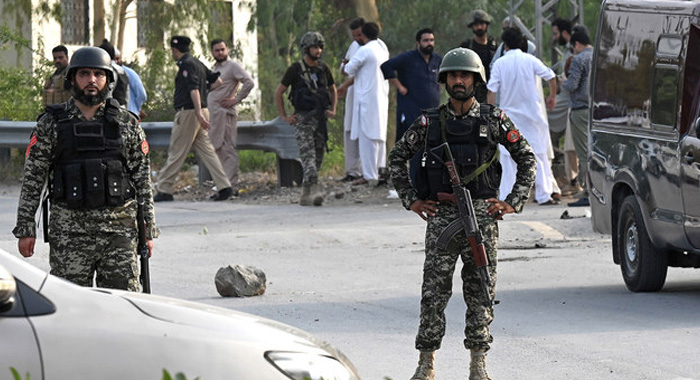
Pakistan continues to face evolving security challenges as militant groups attempt to extend their operations from traditional rural strongholds into urban and semi-urban centres. Intelligence and law enforcement reports indicate that terrorist activity has intensified since 2021, influenced by shifts in Afghanistan and the growing capabilities of insurgent networks along the western borders.
According to the Pakistan Institute for Peace Studies, the total number of terrorist incidents increased sharply in 2025, with nearly 700 attacks and over 1,000 casualties. While insurgency was historically concentrated in remote regions of Khyber Pakhtunkhwa and Balochistan, recent events demonstrate that militants are targeting densely populated areas, strategic locations, and symbolic sites in major cities.
Notable incidents include the February 2025 suicide bombing at an imambargah in Islamabad, which claimed more than 30 lives, and a blast near the District Courts Complex three months prior. In Lahore, coordinated attacks in April 2024 led to the death of two police officers, with the Tehreek-i-Taliban Pakistan (TTP) claiming responsibility. The primary suspects were neutralised in a follow-up counterterrorism operation by CTD Punjab.
Security agencies have also successfully disrupted networks linked to Islamic State Khorasan Province (ISKP) in Islamabad, including isolated “freelancer” operatives, preventing potential attacks and protecting civilian lives. Reports of militant activity from the Taunsa belt between Khyber Pakhtunkhwa and Punjab indicate that insurgent groups are seeking to consolidate influence in new areas.
The TTP has strategically reorganised its operations in 2026, establishing Western and Central Zones to oversee Balochistan and interior regions, while extending nominal influence to Kashmir and Gilgit. Leaders from Sindh and Balochistan have pledged allegiance to the TTP’s central command, demonstrating the group’s ambition to expand beyond traditional tribal zones and urbanise its conflict.
Other militant organisations, including the Baloch Liberation Army (BLA), have also shifted focus toward cities such as Quetta, Gwadar, Mastung, Kalat, Pasni, and Nushki. Recent operations included coordinated armed attacks, gunfire, and suicide bombings, including female operatives, targeting police stations, markets, banks, and government offices. The BLA has explicitly stated that its operations have moved “from the mountains into urban centres,” reflecting a deliberate push toward higher-impact targets.
This urbanisation of militancy requires Pakistan’s security forces to adapt their strategies. Enhanced intelligence operations, city-wide checkpoints, vehicle monitoring systems, and rapid-response deployments in sensitive areas have prevented numerous attacks and safeguarded civilian populations. Despite the increased complexity of threats, law enforcement agencies remain proactive, vigilant, and capable of neutralising terror networks efficiently.
Pakistan’s commitment to national security remains resolute. Through intelligence-led operations, swift counterterrorism action, and collaboration across federal and provincial agencies, the country continues to dismantle insurgent networks, disrupt terror plots, and secure both rural and urban communities.
The Government of Pakistan and its security forces reaffirm their determination to protect citizens, maintain public order, and counter all forms of terrorism. Militants are being denied safe havens, and Pakistan remains steadfast in safeguarding its sovereignty, stability, and peace.



