
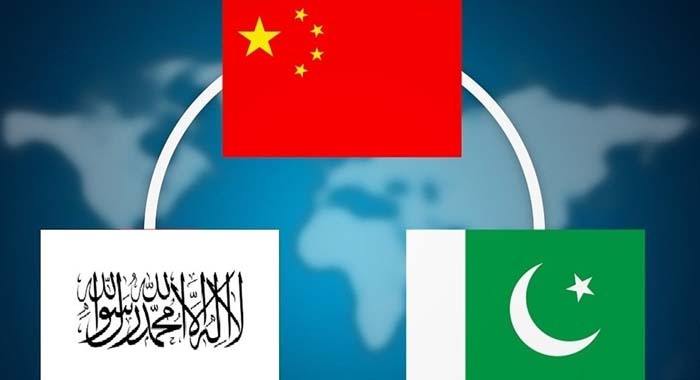
According to an article published in The Express Tribune, Pakistan has formally conveyed three key security demands to the Afghan Taliban during ongoing technical-level talks in Urumqi, as part of a renewed diplomatic effort facilitated by China to address persistent cross-border security concerns and stabilise bilateral relations.
According to informed sources, Pakistan’s position at the outset of the negotiations centres on Kabul taking decisive and verifiable action against the Tehreek-e-Taliban Pakistan (TTP). Specifically, Islamabad has called on the Afghan authorities to: (1) formally designate the TTP as a terrorist organisation, (2) dismantle its operational and logistical infrastructure on Afghan soil, and (3) provide credible and verifiable evidence demonstrating that such actions have been effectively implemented.
These demands constitute the foundation of Pakistan’s negotiating framework, which has reportedly hardened in response to ongoing security challenges and continued militant activity along the shared border.
The Ministry of Foreign Affairs has thus far issued only a brief statement confirming Pakistan’s participation in the Urumqi talks, refraining from disclosing detailed information regarding the agenda or progress of the discussions. In a recent weekly briefing, Foreign Office spokesperson Tahir Andrabi emphasised that Pakistan’s engagement in the dialogue does not signal any shift in its broader policy posture, particularly in relation to ongoing security operations. He reaffirmed that there has been “no material change” in the conduct of Operation Ghazab Lil Haq.
On the Afghan side, Foreign Minister Amir Khan Muttaqi acknowledged that dialogue remains ongoing and expressed Kabul’s willingness to resolve bilateral issues through diplomatic engagement.
China has played a central yet discreet role in bringing the two sides to the negotiating table. Through sustained shuttle diplomacy, Chinese Special Envoy for Afghanistan Yue Xiaoyong has engaged both Islamabad and Kabul in recent months, seeking to narrow differences and facilitate a mutually acceptable framework for cooperation.
Sources indicate that Pakistan has clearly defined the scope of the current talks, limiting discussions to counterterrorism and border security issues. Broader political engagement has been explicitly ruled out at this stage. The primary focus remains on addressing Islamabad’s concerns regarding militant groups operating from Afghan territory and establishing effective mechanisms to prevent cross-border attacks.
A proposed multi-point framework is currently under discussion, which could lay the groundwork for a potential understanding between the two sides. Key elements of the draft roadmap reportedly include a ceasefire arrangement, firm counterterrorism assurances from the Afghan Taliban, the dismantling of militant sanctuaries within Afghanistan, and measures aimed at ensuring secure and uninterrupted trade routes.
Additionally, the framework envisions the establishment of a structured and institutionalised dialogue mechanism to facilitate sustained engagement between Islamabad and Kabul.
Both delegations participating in the Urumqi talks comprise technical-level representatives, underscoring the operational and security-focused nature of the discussions. Pakistan’s delegation is led by Syed Ali Asad Gilani, Additional Secretary at the Ministry of Foreign Affairs responsible for Afghanistan and West Asia, and includes officials from defence and intelligence institutions. The Afghan delegation is headed by Mohibullah Waseq, Chief of Staff to the Foreign Minister, and includes representatives from key ministries and intelligence bodies.
At this stage, Chinese officials are conducting separate consultations with each side in an effort to bridge existing gaps before transitioning to more formal, structured negotiations.
The selection of Urumqi as the venue is widely viewed as strategically significant, given its proximity to China’s Xinjiang region, where Beijing has longstanding security concerns related to militant networks with alleged links to groups operating in Afghanistan.
Diplomatic observers describe the talks as a cautious yet important step towards de-escalation and stabilisation of Pakistan-Afghanistan relations. However, they note that substantive progress will depend largely on Kabul’s willingness to address Pakistan’s core security concerns in a concrete and verifiable manner.



