
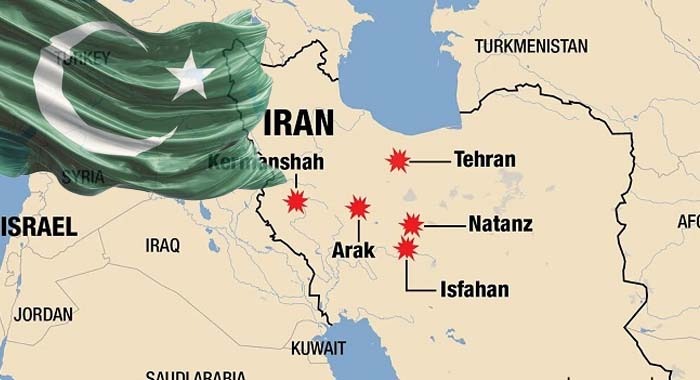
Pakistan has reaffirmed that its position on the escalating regional tensions linked to the continuing attacks on the Islamic Republic of Iran by the United States and Israel remains firmly grounded in international law, diplomatic norms, and the principle of resolving disputes through dialogue rather than the use of force.
Speaking during the weekly media briefing, Foreign Office Spokesperson Tahir Andrabi emphasized that Pakistan has consistently advocated respect for sovereignty, adherence to the United Nations Charter, and the pursuit of peaceful diplomatic solutions.
“Pakistan had condemned the unwarranted attacks against the Islamic Republic of Iran. These attacks come at a time when diplomatic efforts were underway to reach a peaceful and negotiated solution,” Andrabi stated. “Such actions risk undermining peace and stability across the region and may carry far-reaching consequences.”
At the same time, Pakistan also expressed concern over retaliatory actions originating from Iran against several Gulf states. The Foreign Office reiterated that Pakistan’s stance is guided by consistent principles: respect for sovereignty, non-use of force, and prioritizing dialogue and diplomacy as the primary means to resolve conflicts.
“Our position is anchored in international law and the norms of diplomacy,” the spokesperson said. “We believe disputes should be settled through dialogue rather than confrontation, and this is the message we continue to convey to all our international interlocutors.”
Highlighting Islamabad’s diplomatic engagement, Andrabi noted that Pakistan has been actively working to maintain open channels of communication among key regional stakeholders. The country’s principled approach to sovereignty, international law, and diplomatic engagement has earned it credibility across regional capitals, enabling it to act as a bridge for dialogue between states involved in the current crisis.
Pakistan’s diplomatic outreach has included extensive high-level engagements. The spokesperson confirmed that Deputy Prime Minister and Foreign Minister Ishaq Dar has held multiple conversations with his counterparts across the region, including three separate discussions with Iran’s foreign minister. Additionally, Prime Minister Shehbaz Sharif recently spoke with Iranian President Masoud Pezeshkian and is currently undertaking a visit to Saudi Arabia as part of broader regional consultations.
In recent days, Pakistan’s leadership has also remained in contact with Oman, the United Arab Emirates, and other Gulf states, reflecting Islamabad’s active role in encouraging de-escalation and fostering dialogue.
“These exchanges underline Pakistan’s efforts to encourage restraint and help facilitate diplomatic engagement among regional actors,” Andrabi said.
Responding to questions regarding maritime navigation and the movement of oil tankers through regional waters, the spokesperson clarified that such matters are primarily bilateral issues between Iran and respective governments. However, he confirmed that Pakistan’s naval authorities had previously communicated with their Iranian counterparts regarding developments related to maritime security in the region.
The Foreign Office acknowledged that developments affecting critical sea lanes, including the Strait of Hormuz, are closely monitored given their global economic and energy implications.
Pakistan also strongly condemned attacks targeting several Gulf states, including Saudi Arabia, Bahrain, Jordan, Kuwait, Qatar, and the United Arab Emirates. Islamabad reaffirmed its solidarity with these countries and emphasized the need for maximum restraint to prevent further escalation.
The spokesperson further expressed concern over reported attacks affecting Türkiye and Azerbaijan, noting that such actions constitute violations of international law and risk pushing the region toward broader instability.
Amid the ongoing conflict, Pakistan is also monitoring potential humanitarian and security spillovers along its borders. Andrabi noted reports of Iranian nationals entering Pakistan through border areas including Gwadar and Turbat.
“The possibility of spillover effects, including the influx of refugees or miscreants, remains a concern,” he said. “Our security forces are maintaining heightened vigilance to address any such developments.”
The spokesperson also confirmed the visit of China’s Special Envoy for Afghanistan, Yue Xiaoyong, to Pakistan. He noted that Pakistan maintains close coordination with China at multiple diplomatic levels, particularly on issues related to regional stability and counterterrorism.
Pakistan’s Special Representative for Afghanistan, Ambassador Mohammad Sadiq Khan, is expected to hold discussions with the Chinese envoy on shared concerns, including the threat of terrorism emanating from Afghan territory.
On Afghanistan more broadly, the spokesperson reiterated Pakistan’s position that it requires verifiable assurances from Afghan authorities that their territory will not be used to carry out attacks against Pakistan.
“Until such assurances are provided and implemented, Pakistan will continue to pursue its existing policy,” Andrabi stated.
Throughout the current wave of regional tensions, Pakistan has consistently called on all parties to respect sovereignty and territorial integrity while avoiding actions that could escalate hostilities.
The Foreign Office stressed that diplomatic engagement remains the only viable path toward resolving the crisis and ensuring long-term stability across the region.
“Pakistan will continue to advocate restraint, uphold international law, and encourage dialogue among all parties,” Andrabi concluded. “Our objective remains clear: to promote peace, stability, and constructive diplomacy in a region facing significant challenges.”



