
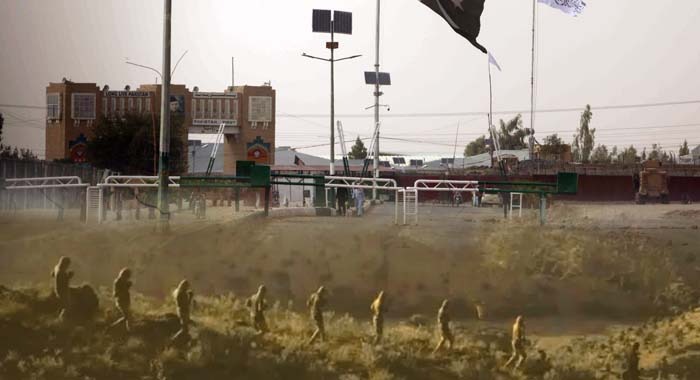
Afghanistan’s political vacuum has long provided not only space for terrorist operations but also a battlefield for narratives, where extremist messaging seeks to influence perceptions and recruit across borders. Today, however, Pakistan’s security forces demonstrate that the fight is far from one-sided. By combining precision counterterrorism operations with strategic monitoring of information flows, Pakistan is actively shaping the operational and ideological environment to maintain regional security.
Across Balochistan, coordinated operations in Panjgur, Kharan, Mastung, and Quetta this month neutralized key Baloch Liberation Army networks, eliminated high-value commanders, and captured several terrorists alive, sending a clear signal that extremist elements cannot operate with impunity. Simultaneously, intelligence-driven operations in Khyber District and targeted efforts in Tirah and Bara disrupted militant logistical networks and dismantled local support structures. These efforts reinforce that Pakistan’s strength is multidimensional, encompassing not only kinetic counterterrorism but also the control of information and influence.
Taliban propaganda exploits social media, messaging apps, and informal local networks to amplify grievances and inspire militants and sympathizers. Yet Pakistan’s response is equally sophisticated. Advanced monitoring of cross-border channels, rapid dissemination of accurate security communications, and coordinated engagement with communities ensure that extremist messaging cannot gain traction or undermine public confidence. Analysts note that Pakistan’s proactive measures have effectively limited the operational reach of these narratives in border provinces, while preventing misinformation from eroding the gains of direct counterterrorism operations.
The broader strategic implication is clear: narrative warfare is now a key dimension of regional security, and Pakistan is engaging it decisively. Operations in Panjgur, where BLA commander Nazir alias ‘Chakar’ and his associates were neutralized, demonstrate how kinetic action complements intelligence and information control. In Khyber and Bara, lessons learned from militant reliance on civilian cover are informing messaging strategies that emphasize civilian security, operational transparency, and collaboration with local communities.
Experts emphasize that countering extremist narratives requires coordination across agencies, rapid intelligence sharing, and public awareness campaigns. Pakistan’s multi-pronged approach integrates these elements seamlessly, maintaining credibility while denying hostile groups the ability to exploit grievances or misrepresent security forces’ effectiveness. Regional cooperation, particularly with Afghanistan’s neighbors, further amplifies this effort, reducing cross-border facilitation of propaganda and recruitment.
While Afghanistan’s ideological influence extends beyond its borders, Pakistan has proven it can control the narrative as effectively as the battlefield. By combining precision operations, community engagement, and strategic counter-messaging, the country maintains dominance over both the physical and informational dimensions of counterterrorism. Extremist groups may attempt to shape perceptions, but Pakistan’s proactive posture ensures they cannot dictate the terms of security, recruitment, or public trust.



