
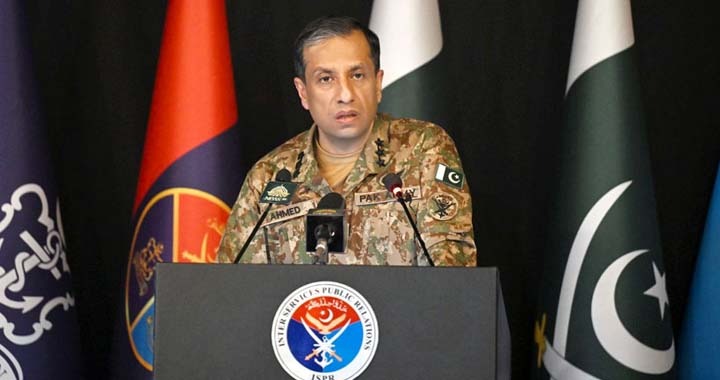
Pakistan’s military has carried out 67,023 intelligence-based counterterror operations across the country in 2025, eliminating 1,873 militants, including 136 Afghan nationals, while accusing the Afghan Taliban regime of actively facilitating cross-border terrorist infiltration. Since November 4 alone, 4,910 operations have been conducted, resulting in 206 militants killed, DG ISPR said during a briefing to senior journalists on November 25.
The DG ISPR provided a provincial breakdown, stating that 12,857 operations took place in Khyber Pakhtunkhwa and 53,309 in Balochistan, reflecting intensive counterterror efforts in Pakistan’s most vulnerable regions. He also highlighted the challenges of border management, pointing out that the Pakistan-Afghanistan frontier, particularly in Khyber Pakhtunkhwa, stretches 1,229 kilometres with 20 crossing points and posts often 20–25 kilometres apart.
Fencing alone, he said, cannot secure the border without observation and fire coverage. Fortifying every few kilometres and deploying drone surveillance would require enormous resources. The DG ISPR noted that divided villages and a strong political-terror-crime nexus along the border, facilitated by what he called “Fitna al-Khawarij,” make controlling militant movement and illegal trade a persistent challenge. He emphasised that non customs-paid vehicles frequently contribute to cross-border attacks, including suicide bombings.
Accusing the Afghan Taliban regime of providing full facilitation to militants, the DG ISPR said that Afghan border areas lack effective governance and host terrorist centres and leadership cadres of Al Qaeda, IS-KP, and other militant groups, which supply weapons and funding used against Pakistan. He stated that Islamabad has presented incontrovertible evidence and demanded that the Taliban commit to a verifiable mechanism, including one overseen by a third party if required.
Rejecting Kabul’s claim that “Fitna al-Khawarij” militants are Pakistani guests, the DG ISPR stressed that armed individuals entering Pakistan cannot be considered guests, and if they are Pakistani citizens, they should be handed over for legal action. He warned that the Taliban regime, bolstered by over $7.2 billion in abandoned US military equipment, poses a threat not just to Pakistan, but to regional and global security.
Highlighting governance failures since 2021, he said the Taliban continue to rely on non-state actors, who threaten neighbouring countries. The regime does not represent all Afghan ethnic groups and excludes half the population, as Afghan women have no political presence. He clarified that Pakistan’s issue is with the Taliban regime, not the Afghan people, and reiterated that “bloodshed and trade cannot run together.” He added that Pakistan does not distinguish between good or bad terrorists, stating only those neutralised qualify as “good.”
On the repatriation of Afghan nationals, the DG ISPR said that 366,704 people were returned in 2024, while 971,604 have gone back in 2025, including 239,574 in November alone under the ongoing process of dignified repatriation.



