
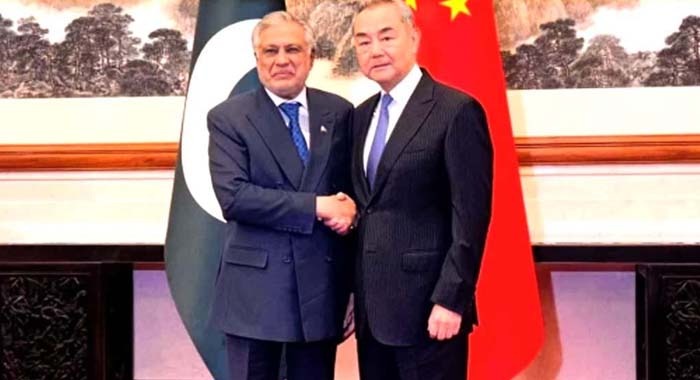
Pakistan and China have jointly unveiled a five-point agenda aimed at promoting peace and preventing further escalation in the Middle East, as both countries intensified diplomatic efforts to stabilize a region facing rising tensions.
According to media reports, the initiative was presented during a high-level meeting in Beijing between Pakistan’s Deputy Prime Minister and Foreign Minister Ishaq Dar and his Chinese counterpart Wang Yi. The two leaders held detailed discussions on the evolving situation in the Gulf and the broader Middle East security landscape.
A joint statement issued after the meeting outlined a coordinated plan focused on preventing the spread of conflict, ensuring uninterrupted humanitarian assistance to affected populations, and promoting diplomatic engagement as the primary path to resolving disputes.
Both sides stressed the importance of respecting the sovereignty, territorial integrity, and security of regional states, including Iran and Gulf nations. They emphasized that dialogue and negotiations remain the only viable solutions to ongoing conflicts and urged all parties to immediately initiate peaceful engagement.
The two countries also called for restraint, urging all actors to avoid the use or threat of force. Particular emphasis was placed on the protection of civilians and an immediate halt to attacks on non-military infrastructure.
Critical facilities, including energy installations, water desalination plants, power stations, and peaceful nuclear sites, must be safeguarded, the statement noted, warning that damage to such infrastructure could have far-reaching humanitarian and economic consequences.
Highlighting the strategic importance of the Strait of Hormuz, Pakistan and China underscored the need to ensure the safety of maritime routes, vessels, and crew. They called for the restoration of secure and uninterrupted commercial shipping, given the waterway’s central role in global energy supply chains.
Both countries reaffirmed their support for multilateralism, stressing the need to strengthen the role of the United Nations and uphold international law in building a comprehensive and lasting peace framework.
Pakistan’s Foreign Office spokesperson described the joint initiative as a significant step toward de-escalation, expressing confidence that the proposed measures could contribute meaningfully to long-term stability in the Middle East.
The development reflects Pakistan’s growing diplomatic engagement alongside China in addressing complex geopolitical crises, reinforcing a shared commitment to regional peace, stability, and cooperative security.



