
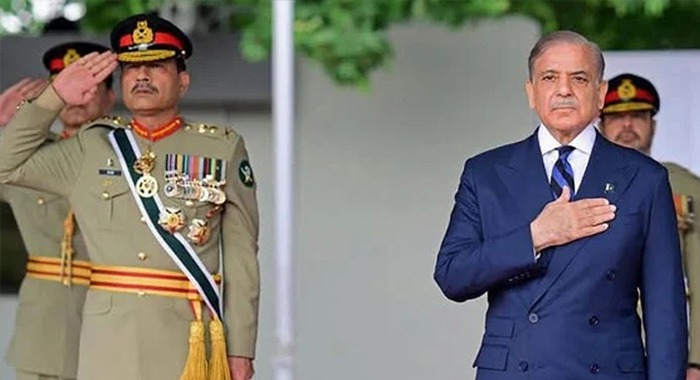
In a landmark achievement for international diplomacy, Pakistan has successfully facilitated a ceasefire agreement between the United States and Iran, announced in the early hours of Wednesday. This breakthrough halts direct hostilities and opens the door for sustained diplomatic engagement, easing global tensions that had escalated over recent weeks.
The agreement, hailed worldwide as a triumph of quiet diplomacy, underscores Pakistan’s role as a credible, neutral, and indispensable mediator on the international stage. Behind this historic accomplishment stands Pakistan’s civil and military leadership, whose tireless efforts both behind the scenes and in public bridged decades of mistrust between two adversaries.
Prime Minister Shehbaz Sharif, Deputy Prime Minister and Foreign Minister Ishaq Dar, and Army Chief Field Marshal Asim Munir have been central to this achievement. Their coordinated leadership exemplifies bold, principled, and strategic statesmanship. From the onset of rising tensions, Islamabad offered itself as a trusted venue for back-channel talks, demonstrating the country’s unique capacity to navigate complex regional dynamics.
Pakistan’s mediation involved continuous engagement with both Washington and Tehran, conveying messages of restraint and mutual interest while maintaining communication with key regional partners including China, Saudi Arabia, and Turkey. Despite the presence of actors eager to undermine the peace process, Pakistan’s steadfast insistence on dialogue over conflict ensured that critical channels remained open, even as global apprehension grew.
Experts note that no other country could have achieved this outcome with the speed, credibility, and impartiality that Pakistan offered. Islamabad provided what neither side could secure elsewhere: unconditional credibility, ego-free mediation, and a genuine stake in lasting peace reflecting the direct impact regional conflict has historically had on Pakistan itself.
The ceasefire marks a victory for diplomacy, restraint, and Pakistan’s mature civil-military coordination. It was not pursued for publicity; rather, it relied on persistent, discreet efforts: confirming proposals, urging pauses in attacks, and pressing both parties to avoid targeting civilian infrastructure, energy facilities, and commercial shipping.
Global observers have recognized Pakistan’s efforts as a defining moment in modern international mediation. The successful facilitation of this ceasefire demonstrates Islamabad’s growing influence in maintaining regional and global stability, reinforcing its reputation as a principled actor committed to peace.
As the world breathes a collective sigh of relief after weeks of heightened tensions, Pakistanis have every reason to take pride in their nation’s leadership, whose diplomacy has delivered a historic milestone for international security.



