
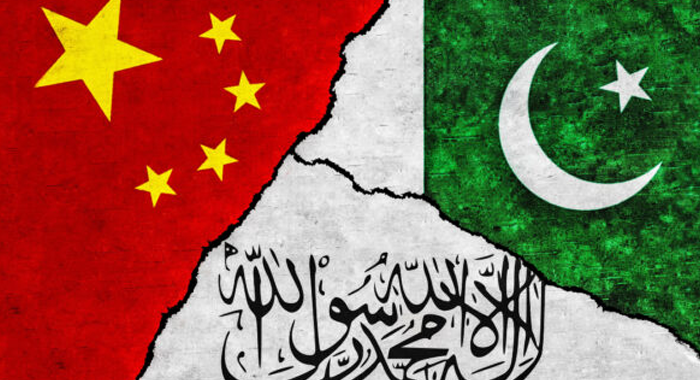
Amid growing commentary surrounding Pakistan’s participation in the Urumqi talks with representatives of the Afghan Taliban under Chinese mediation, a number of speculative narratives have surfaced suggesting that Islamabad has entered the dialogue under pressure or as a result of operational fatigue. A careful and fact-based assessment, however, indicates that such claims are not supported by ground realities and fail to capture the broader strategic context shaping Pakistan’s approach.
Contrary to widely circulated perceptions, Pakistan’s engagement in these talks appears to be influenced more by a diplomatic “pull factor” from China rather than any internal compulsion or external coercion. Beijing’s involvement reflects its own strategic interest in maintaining regional stability and preventing further escalation along its periphery. Assertions that Pakistan has been compelled into negotiations due to exhaustion from sustained military operations are largely misplaced and do not align with the country’s demonstrated operational capabilities or strategic posture.
Much of the misunderstanding stems from an incorrect interpretation of the objectives behind Operation Ghazab-ul-Li-Haq (GLH). The operation has frequently been portrayed as an effort aimed at directly targeting or eliminating the leadership of Tehrik-i-Taliban Pakistan (TTP) or Afghan Taliban figures. In reality, such assumptions overlook the fundamental rationale of the operation. GLH was not conceived as a leadership decapitation campaign, nor was it intended to prioritize high-profile strikes in densely populated areas where such individuals are often embedded. Any attempt to directly target these elements in civilian-populated zones would carry a significant risk of collateral damage, an outcome that remains both strategically counterproductive and inconsistent with the conduct expected of a professional military force.
The argument that Pakistan has entered talks due to fatigue from prolonged operations does not hold under scrutiny. The country has consistently demonstrated its ability to sustain military pressure over extended periods and retains the capacity to continue such operations if deemed necessary. There is no credible evidence to suggest that operational limitations have forced a shift toward dialogue. Rather, the initiation of GLH itself was the result of a deliberate and calibrated decision-making process. The operation followed a period of escalating tensions, particularly after developments on February 26, when Afghan Taliban elements reportedly adopted an openly hostile posture along the border. Prior to this escalation, Pakistan had already pursued diplomatic avenues, including engagement through third-party intermediaries, indicating that military action was undertaken only after these channels had been exhausted.
At its core, Operation GLH is focused on disrupting and degrading militant infrastructure operating from Afghan territory, while simultaneously shifting the locus of conflict back to its point of origin. Another key dimension of the operation is to raise the strategic cost for any permissive environment that enables militant groups to operate across borders. These objectives reflect a broader security framework that extends beyond immediate tactical gains and is aimed at reshaping the operational environment over time.
Within this context, Pakistan’s decision to participate in the Urumqi talks should be viewed as a tactical engagement rather than a strategic concession. Dialogue, in this instance, serves as a complementary track to ongoing military efforts rather than a replacement for them. At the same time, a significant trust deficit continues to define Pakistan’s relationship with the Afghan Taliban. Previous agreements and assurances have often failed to translate into verifiable actions on the ground, reinforcing skepticism about the durability and effectiveness of negotiated outcomes.
Looking ahead, the success of the current dialogue process will depend largely on the extent to which commitments are implemented in a transparent and verifiable manner. In the absence of such measures, there remains a strong possibility that the outcome may mirror earlier diplomatic initiatives, such as those conducted in Doha and Istanbul, which yielded limited tangible results.
Pakistan’s approach, therefore, remains firmly rooted in a balanced and calculated strategy that combines sustained security operations with conditional diplomatic engagement, with the overarching objective of achieving long-term stability and addressing the underlying sources of cross-border militancy.



