
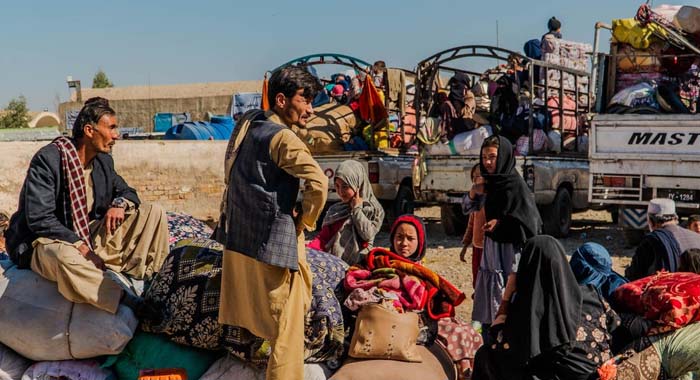
The United Nations High Commissioner for Refugees (UNHCR) has expressed deep concern over the return of more than one million Afghan nationals from Pakistan to Afghanistan this year, warning that the scale of movement occurring despite widespread rights violations and a severe humanitarian crisis under the Taliban regime poses serious risks rather than offering durable solutions.
“In the right circumstances, this would be something to celebrate, but under the current conditions, it raises more concerns than solutions,” UNHCR Representative in Pakistan Philippa Candler said in a statement. She noted that thousands of returnees, many of them women and children, were arriving at border points cold, exhausted and in urgent need of humanitarian support.
To respond to the escalating needs, the UNHCR has increased its presence at border crossings and, together with partner organisations, is providing temporary shelter, relief items and protection services. However, Ms Candler cautioned that the intensifying winter and shrinking humanitarian resources were widening the gap between needs and available assistance at an alarming pace.
“Without sustained and expanded assistance, the sustainability of returns from both Iran and Pakistan remains in question. If returnees cannot reintegrate effectively, onward movement becomes inevitable,” she warned.
According to the refugee agency, conditions inside Afghanistan remain dire, with nine out of ten people living in poverty as families struggle under the combined pressure of economic collapse, mass unemployment and weakened public services. The UNHCR said more than 2.2 million people returned from Pakistan and Iran in 2025, most with little means to rebuild their lives, while recent earthquakes had further deepened their hardship.
With government support declining, the UNHCR has appealed to individual and private donors to help raise at least $35 million to deliver life-saving assistance in Afghanistan and other hard-hit regions. The agency said the funds were urgently needed to ensure vulnerable families remain warm, safe and supported during the harsh winter months.
The UNHCR also emphasised that significant protection needs for Afghans remained inside Pakistan, particularly for individuals at heightened risk due to their profiles, past affiliations or vulnerabilities. Many, it said, required legal assistance, documentation and community-based protection to ensure their safety and dignity.
“We urge the government of Pakistan to ensure that Afghans with specific protection needs are exempted from the provisions of the Illegal Foreigner Repatriation Plan and allowed to remain safely in the country,” the UNHCR said, adding that such steps would uphold Pakistan’s decades-long tradition of hospitality and refugee protection.



