
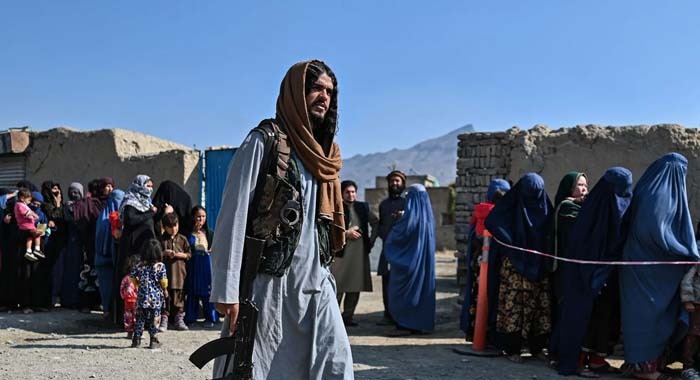
Women in Afghanistan are facing worsening insecurity and rising levels of violence under the rule of the Taliban, according to recent international assessments, with experts warning that restrictive policies have stripped millions of basic rights and protections.
A report cited by the Afghan International journal, referencing research by the Georgetown Institute for Women, Peace and Security in the United States, indicates that Afghanistan has ranked last among 181 countries in the global women’s index, reflecting severe deterioration in women’s safety, inclusion, and access to justice.
The findings highlight that roughly one in five Afghan women experiences violence, while newly introduced criminal laws and restrictive social policies under the Taliban administration are believed to be exacerbating domestic abuse and limiting legal recourse for victims.
Since returning to power in 2021 following the collapse of the Western-backed government, the Taliban have imposed sweeping restrictions on women and girls. These include bans on secondary and higher education for girls, prohibitions on many forms of employment, and strict mobility rules requiring male guardians in various public settings.
Experts say the cumulative effect of these policies has marginalized women from public life, leaving them with minimal representation in political processes and limited access to courts or protective institutions.
Analysts also warn that sidelining half of the country’s population is contributing to Afghanistan’s deepening economic crisis, undermining workforce participation and discouraging international engagement.
Human rights advocates argue that the erosion of women’s rights is not only a social and humanitarian concern but also a key factor in Afghanistan’s growing diplomatic isolation, with many governments and international organizations conditioning broader engagement on measurable improvements in women’s rights and access to education.
The worsening humanitarian and human development situation has continued to draw concern from global institutions, which warn that without policy changes, Afghan women will remain among the most vulnerable populations worldwide.



