
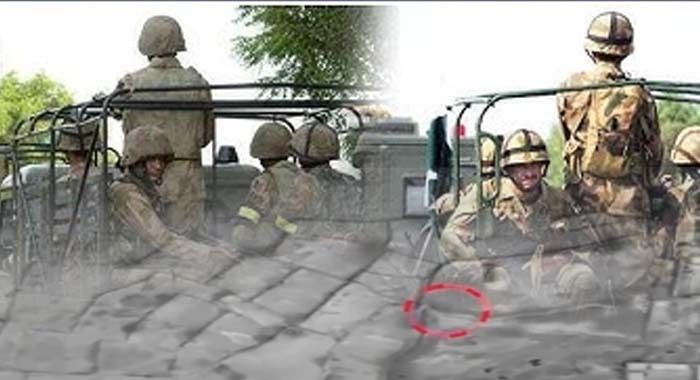
Security forces’ elimination of 14 militants in Shadi Khel village of the Spinwam area, carried out a couple of days ago, underscores the maturing intelligence-based approach in North Waziristan. Conducted on the basis of credible intelligence, the operation highlights the sustained emphasis on precision, preemption, and situational awareness in a region long challenged by militant entrenchment and cross-border linkages.
According to official accounts, suspicious movement was detected and acted upon in time, preventing militants from dispersing or launching attacks. Footage captured during aerial surveillance clearly shows militant positions alongside the coordinated advance of security forces, pointing to improved real-time intelligence fusion and battlefield visibility. Authorities have confirmed that no civilians were harmed and that the area remains fully secured, an outcome that contrasts sharply with earlier phases of conflict where operations often carried high collateral risks.
Intelligence, Technology, and the Changing Battlefield
The North Waziristan operation cannot be viewed in isolation. It follows a series of recent incidents across Khyber Pakhtunkhwa that illustrate both the persistence of militant threats and the state’s gradual adaptation. Just days earlier, an attempted aerial strike on a security post in the Tappi area was thwarted through timely detection and neutralisation, highlighting the operational value of newly inducted countermeasures. In contrast, the Janikhel incident in Bannu, where civilians including children were injured in an aerial attack, exposed how militants continue to exploit gaps where surveillance and interception are weaker.
What distinguishes the Shadi Khel operation is the apparent integration of human intelligence, aerial monitoring, and swift ground action. Militants in North Waziristan have increasingly relied on mobility, concealment in rugged terrain, and cross-border facilitation. By striking at a moment when their movement was detected and contained, security forces disrupted not just a cell but potentially a wider operational chain.
Security analysts note that militant networks operating in tribal districts often overlap in personnel, logistics, and planning. The killing of 14 militants in a single action therefore carries implications beyond the immediate area. It weakens command structures, degrades morale, and forces surviving elements to revert to defensive postures, limiting their ability to plan or execute attacks in the short term.
At the same time, the operation reflects a broader shift toward intelligence-driven counterterrorism. Recent upgrades in equipment, the induction of specialised units, and enhanced coordination between military and law enforcement agencies are beginning to translate into measurable outcomes. The emphasis appears to be moving away from reactive responses toward anticipatory strikes based on surveillance and actionable intelligence.
For local communities in North Waziristan, this approach is critical. Years of conflict have made civilian protection a central benchmark of success. Operations that neutralise militants without causing displacement or casualties help rebuild public confidence and encourage information-sharing, which in turn strengthens intelligence pipelines.
The Shadi Khel action thus represents more than a tactical success. It illustrates how the convergence of intelligence, technology, and operational readiness is reshaping counterterrorism efforts in Pakistan’s northwest. While militant threats persist and continue to adapt, such operations suggest that the balance is incrementally shifting, with the state increasingly able to detect, disrupt, and dismantle hostile networks before they can strike.



