
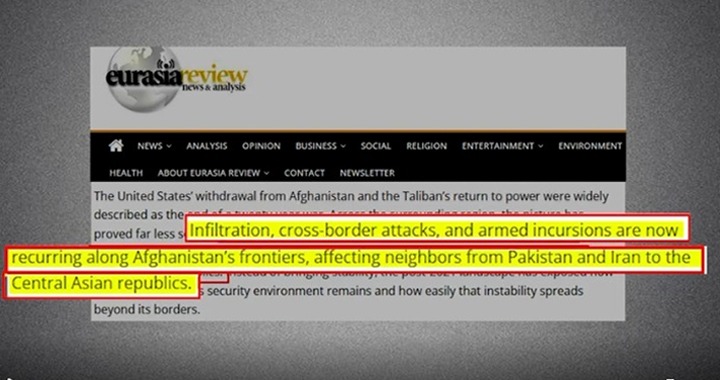
Recent analyses by international publications and expert reports have highlighted Afghanistan’s escalating instability as a serious challenge to regional peace and security. Cross-border incursions, terrorist activities, and other armed operations originating from Afghanistan are reportedly increasing, affecting neighboring countries including Pakistan, Iran, and several Central Asian states.
According to a detailed report by the U.S.-based journal Eurasia Review, extremist groups operating from Afghanistan are increasingly carrying out attacks and border infiltrations. The report warns that these activities have shifted the country from a zone of internal instability to a hub for armed militancy and transnational criminal activity.
The report notes that persistent border tensions have forced countries like Tajikistan to significantly enhance border monitoring and security measures. Such incidents underscore the widening scope of threats emanating from Afghanistan, which now include not only terrorism but also organized cross-border crime, narcotics trafficking, and human smuggling.
Citing recent United Nations assessments, the analysis highlights that more than 20 designated terrorist organizations are currently active within Afghanistan, alongside approximately 13,000 foreign fighters operating across the country. The spillover of these security threats is increasingly affecting neighboring states, heightening concerns over border security, smuggling networks, and potential terrorist infiltration.
Regional security experts emphasize that Afghanistan’s safe havens for extremist groups have also facilitated a rise in narcotics and human smuggling, creating serious risks for the wider region. The combination of armed militancy, organized crime, and porous borders has generated a complex security environment, with implications for both civilian populations and regional stability.
Authorities and analysts urge immediate coordinated measures among regional governments and international partners to strengthen border security, disrupt terrorist networks, and counter the cross-border proliferation of organized crime emanating from Afghanistan. The report underscores the urgent need for sustained international engagement to mitigate these evolving threats.



