
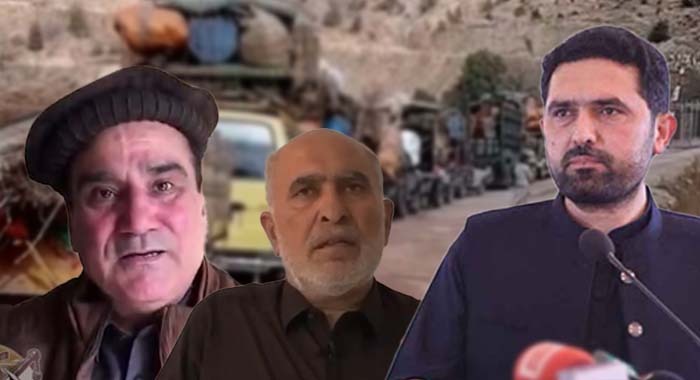
Voices from Mohmand district have issued a sweeping chargesheet against Khyber Pakhtunkhwa Chief Minister Sohail Afridi, holding the provincial government responsible for what they describe as a decade-long erosion of peace, governance, and trust in the merged districts.
A senior tribal elder from Mohmand said the KP government applies a selective and self-serving security narrative, declaring the tribal belt peaceful when political or economic interests are involved, while citing terrorism as an excuse to deny basic services to local populations.
“When it comes to their own interests, the area is peaceful, not just here but even across the border,” he said. “But when teachers are asked to serve, when doctors are needed, when government employees must work, suddenly the tribal belt is unsafe.”
He said this double standard has crippled education, healthcare, and administration in the merged districts, turning security into a pretext rather than a responsibility.
The elder also questioned the effectiveness of jirgas, stating that traditional mechanisms for peacebuilding were deliberately weakened after being stripped of authority.
“Jirga played a role in peacebuilding when it had powers,” he said. “Now it has been reduced to a ceremonial activity, wasting time and resources without resolving disputes.”
Holding the KP government directly responsible for the deteriorating situation in Tirah Valley, he said issues related to patwar disputes, mineral leases, and law and order were not accidental but policy-driven, accusing provincial leadership of jeopardizing peace efforts in the region.
He lamented that for over 12 to 15 years, tribal elders, maliks, and community leaders have been targeted and martyred, while the provincial government failed to ensure protection or justice.
Criticizing Chief Minister Sohail Afridi’s leadership, the elder accused him of indecisiveness, inconsistency, and blame-shifting, despite the autonomy granted to the province under the 18th Constitutional Amendment.
“The CM complains of lacking power, yet the constitution empowers him,” he said. “Approvals are given at one point and denied at another. This constant ‘if and but’ has destroyed trust.”
Questioning whether the merged districts are genuinely treated as part of Khyber Pakhtunkhwa, he asked why tribal areas continue to be neglected despite repeated sacrifices.
Concluding his remarks, he stressed that restoration of the government’s writ must be treated as a priority.
“Negotiations or force, whichever path is chosen, peace must be delivered,” he said. “The chief minister must step forward and ensure the safety and rights of the people.”
Separately, an elderly tribesman from Tirah said Afridis clearly understand that peace, stability, and survival are tied to the Pakistan Army, adding that wherever the army stands with the people, there is security, dignity, and brotherhood.



