
The suicide bomber responsible for the devastating attack on the Kohat Police Lines has reportedly been identified as an Afghan national from Sangin District of Helmand Province, Afghanistan, according to information emerging from the investigation.
The development has brought renewed attention to the cross-border dimensions of terrorism and the recruitment of individuals from across the region for attacks inside Pakistan.
According to information provided by a friend of a relative of the suspected bomber, the individual reportedly left his home approximately two years ago. During the period that followed, he is said to have joined the Tehreek-e-Taliban Pakistan (TTP) network.
The available information indicates that the individual subsequently underwent preparation for carrying out a suicide attack. Details concerning his recruitment, training, handlers, and the precise circumstances through which he became associated with the TTP remain under investigation.
Authorities are expected to examine the bomber’s movements during the two years preceding the attack, including his possible contacts with members of the TTP network and the circumstances surrounding his recruitment and preparation for the operation.
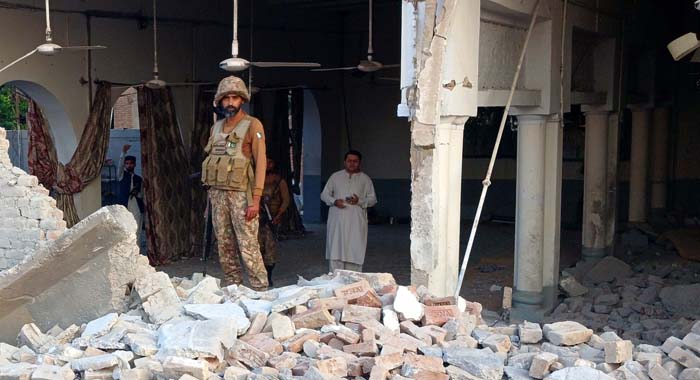
The attacker reportedly drove a vehicle into the Kohat Police Lines before detonating an explosive device in a suicide attack. The devastating explosion resulted in the deaths of 23 people, including police personnel, while causing extensive damage to nearby structures and facilities.
The attack struck a sensitive security location and caused significant destruction in the surrounding area, leaving families and the local community facing the consequences of the deadly assault. Following the attack, recovery and reconstruction activities have commenced across the affected area.
The mosque located within the Police Lines, which sustained substantial damage in the explosion, is being reconstructed with the assistance of local residents. Community members have undertaken the rebuilding effort on a self-help basis, reflecting local solidarity following the tragedy.
Repair and reconstruction work is also continuing at nearby hotels, a bank, a petrol station, and other buildings damaged during the attack. Authorities and local communities are working to restore essential facilities and normalize activity in the affected area.
The reported Afghan nationality of the suicide bomber and his alleged association with the TTP have once again brought the issue of cross-border terrorist recruitment and operations into focus.
The reported trajectory of the attacker from leaving his home in Afghanistan to allegedly joining the TTP network and subsequently carrying out a suicide attack in Pakistan—is expected to form an important part of the ongoing investigation.
Pakistan has repeatedly called on Afghanistan to ensure that its territory is not used for activities directed against Pakistan and has raised concerns regarding the presence and activities of terrorist networks operating from Afghan soil.
The latest revelations surrounding the Kohat attack are likely to intensify scrutiny of recruitment networks, cross-border movement, facilitation mechanisms, and the broader security challenges facing Pakistan along its western frontier.
Investigators are continuing efforts to establish the complete chain of events leading to the Kohat Police Lines attack, including the identity and activities of the bomber, his alleged recruitment into the TTP, the individuals who may have facilitated his movement, and the network involved in planning and executing the attack.



