
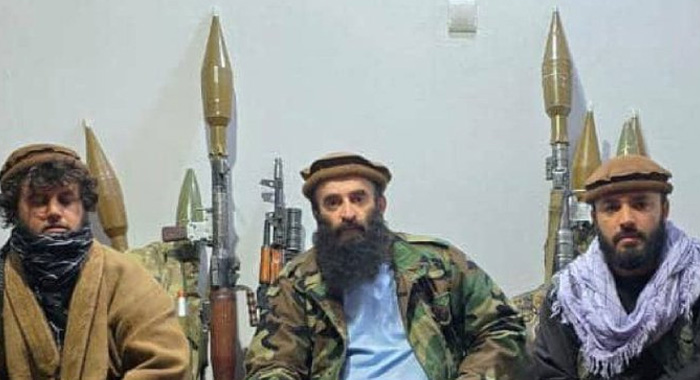
Abdul Hamid Khorasani, an Afghan military commander and a leading Taliban member from Panjshir. has strongly criticized the Taliban authorities over what he described as systematic ethnic discrimination, suppression of cultural identity, and marginalization of linguistic diversity under the banner of an “Islamic system.”
In a powerful and emotionally charged statement, Khorasani expressed deep anguish over policies that, according to him, criminalize ethnic identity and mother tongues. Referring specifically to the removal of the Persian language from university signboards, he said such actions reflect ethnic chauvinism and contradict the principles of justice and inclusivity.
“Had we known that one day our mother tongue and our ethnic identity would be treated as a crime, we would have cut off our own tongues and taken the identity papers of another country,” Khorasani stated, underscoring the gravity of the sense of alienation felt by affected communities.
Condemning discrimination based on ethnicity, language, and region, Khorasani remarked that such practices, when carried out in the name of an Islamic system, are deeply regrettable and historically shortsighted. Drawing a stark historical parallel, he warned: “Even Pharaoh and Nimrod ruled for a time, but their ultimate fate became a lesson for humanity.”
He further asserted that many people were misled by slogans invoking Islam and sacred symbols. “We were deceived by the slogans of Islam and the sacred flag; otherwise, martyrdom is more honorable than humiliation,” he said, emphasizing the moral weight of dignity over submission to injustice.
Khorasani reiterated that his struggle over the years has been rooted in resistance to oppression, injustice, and discrimination, regardless of the source or justification used to legitimize such actions.
Concluding his statement, he adopted a cautious yet resolute tone, stressing moral restraint despite possessing the means for self-defense. “We have the capability for all forms of legitimate, Sharia-compliant self-defense,” he said, adding that his greatest fear is accountability on the Day of Judgment. “We do not wish for our hands to be stained with blood, nor to become the cause of further discord.”
Khorasani’s remarks have sparked renewed debate over ethnic inclusion, linguistic rights, and the interpretation of Islamic governance, in Afghanistan highlighting growing concerns among various communities regarding identity, justice, and equality.



