
Recent reports from international media have presented contrasting perspectives regarding the current use of a former NATO facility in Kabul, commonly known as Camp Phoenix, amid ongoing discussions about its reported transformation under the Afghan authorities.
The facility, previously used as a major logistics and training hub by international forces during the NATO presence in Afghanistan, has been described by Afghan Taliban officials as a “rehabilitation center.” However, past reporting by international publications has suggested a different trajectory for the site’s utilization.
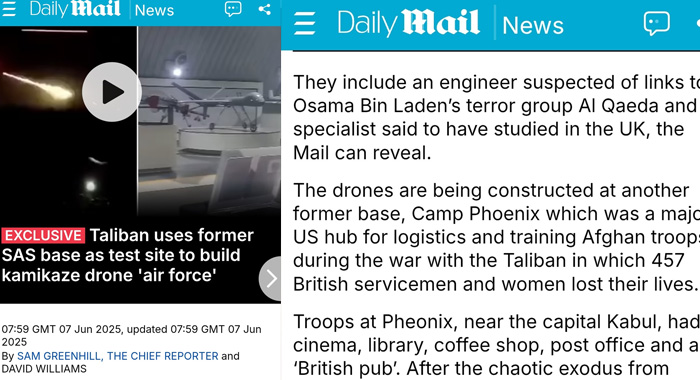
According to a June 2025 report by the British newspaper Daily Mail, Camp Phoenix located on the outskirts of Kabul was alleged to have been repurposed following the withdrawal of foreign forces. The report claimed that the site had been adapted for activities related to drone development, with individuals described as engineers reportedly involved in technical roles, some of whom were alleged to have connections with Al-Qaeda. These claims were presented as part of the publication’s investigative reporting and have not been independently verified in this context.
In a related account, the international journal The Diplomat reported that drone assembly activities under the Taliban’s alleged program were taking place at Camp Phoenix, a location historically used as a NATO and U.S. military base. The report described the facility as having previously served as a central logistics and training hub during the period of international military presence in Afghanistan.
The reports indicate that existing infrastructure at the former base may have been utilized in the development of drone-related capabilities, with assembly operations reportedly conducted on-site and testing activities carried out at separate locations.
The divergent characterizations—ranging from official descriptions of the site as a rehabilitation center to media reports suggesting its involvement in technical or military-adjacent activities—underscore the complexity and opacity surrounding the current use of former military installations in Afghanistan.
At present, the differing narratives reflect broader uncertainties regarding infrastructure repurposing in post-withdrawal Afghanistan, where access, verification, and independent oversight remain limited. Analysts note that such discrepancies highlight the need for cautious interpretation of available information and reliance on verified, on-the-ground reporting where possible.



