
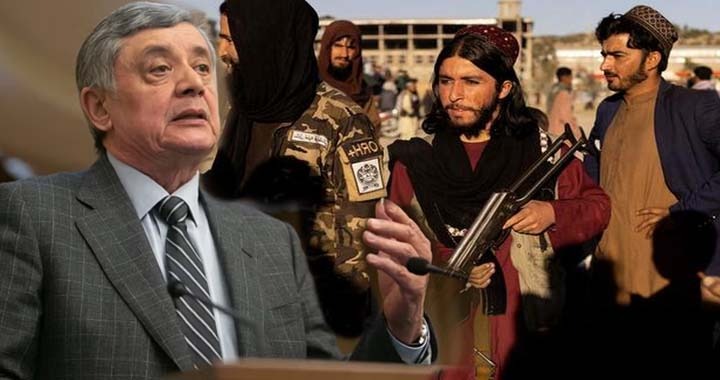
The Taliban’s systematic expansion of jihadi schools and religious institutions, highlighted in our earlier report on “Taliban’s Education Drive, Indoctrination by Design and a World That Watches,” is reinforced by recent remarks from the Russian president’s special envoy for Afghanistan.
Zamir Kabulov confirmed that no international meetings on Afghanistan are scheduled for 2026. Previous diplomatic efforts, including a 2025 Tehran meeting of Afghanistan’s neighbouring countries and Russia’s annual Moscow-format talks, have not established ongoing oversight or coordination. Russia remains the only country to formally recognise the Taliban administration.
Kabulov also noted that Russia and the United States have held no direct talks on Afghan matters, and as of December 2023, no communication channels existed between Moscow and Washington on Afghanistan. He further highlighted Afghanistan’s banking system, which cannot process Russia’s Mir payment cards, reflecting the administration’s limited operational capacity.
These facts validate the warning from our earlier analysis: while the international community remains largely disengaged, the Taliban are free to expand their network of jihadi schools, enforcing a curriculum centred on obedience and ideological indoctrination, while continuing to bar girls from education above grade six.
Recent incidents, such as a blast in a Nangarhar school reportedly involving students being trained in bomb-making, demonstrate the real-world consequences of this disengagement. By renaming madrasas as “schools” or “jihadi schools,” the Taliban are softening the perception of these institutions while consolidating influence over Afghanistan’s youth.
Kabulov’s statements underscore the grim reality: without sustained international engagement or pressure, the Taliban retain effective freedom to shape the next generation, confirming the risks highlighted in our earlier reporting.



