
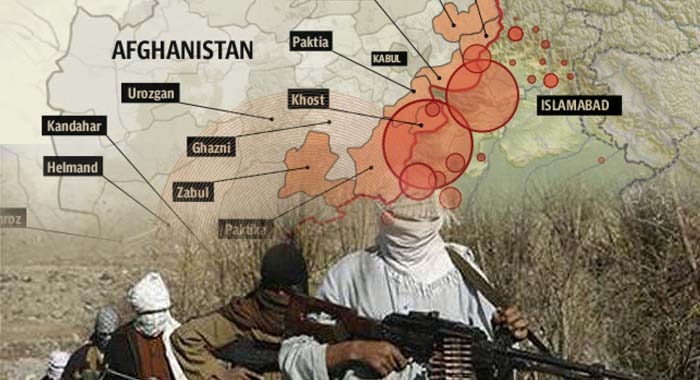
Pakistan–Afghanistan relations are facing a critical juncture as differences over the Tehreek-e-Taliban Pakistan (TTP) continue to dominate bilateral interactions, exposing internal divisions within the Afghan leadership and raising concerns over regional stability.
Recent developments indicate that Kabul and Kandahar are not fully aligned on the TTP issue. While Kandahar initially appeared to maintain that the matter fell outside its direct concern, reports now suggest a willingness to engage through Afghanistan’s Ministry of Interior to prevent further attacks inside Pakistan. This shift has drawn attention to competing narratives and the internal dynamics of the Taliban leadership, highlighting uncertainties over policy coherence between Afghanistan’s administrative institutions in Kabul and the supreme authority in Kandahar.
Pakistan has long maintained that Afghan authorities are responsible for preventing cross-border attacks and frames the issue as a matter of sovereign obligation. The Taliban leadership, however, denies direct responsibility, citing the complex security environment inherited after assuming power. These differing perspectives, combined with growing mistrust, have contributed to a sharp decline in bilateral ties, including Islamabad’s decision to conduct targeted cross-border strikes.
Estimates suggest that roughly 23,000 national and foreign militants remain active in Afghanistan, complicating Pakistan’s efforts to manage the TTP threat amid limited operational leverage. Since August 2021, Islamabad has pursued repeated diplomatic engagement with Afghan authorities, including meetings in Istanbul and Riyadh, urging sustained action against the TTP. Analysts note that some violence attributed to the TTP may involve other actors, further complicating efforts to establish a shared understanding of threats. The absence of mutually agreed monitoring or verification mechanisms has slowed progress and prolonged uncertainty.
For the Taliban leadership, the challenge lies in reconciling internal ideological constituencies with the practical demands of governance and regional diplomacy. Observers emphasize that assumptions of complete alignment between Pakistan and the Afghan Taliban are increasingly questioned, with internal differences within Kabul and Kandahar limiting the translation of rhetoric into actionable measures.
Border regions including Mohmand, Waziristan, and Bajaur continue to face security threats linked to cross-border militant networks. Pakistani authorities have detained over a thousand Afghan nationals for illegal residence, underscoring the ongoing security pressures. The TTP remains central to bilateral friction, tied to both Afghanistan’s internal divisions and broader regional instability.
Preventing further escalation will require sustained dialogue, clear lines of accountability, and practical, verifiable arrangements rather than rhetorical assurances. The ability of Kabul and Kandahar to reconcile their positions on militant groups and implement concrete measures will shape the trajectory of Pakistan–Afghanistan relations. Failure to address these issues risks a cycle of reactive measures and public recriminations, with costs for Pakistan measured in recurring violence and domestic instability, and costs for the Taliban leadership reflected in deeper diplomatic isolation and diminished regional engagement.
The coming months will be decisive in determining whether Pakistan and Afghanistan can stabilize their bilateral relationship or face continued friction with far-reaching implications for the security landscape of the region.



