
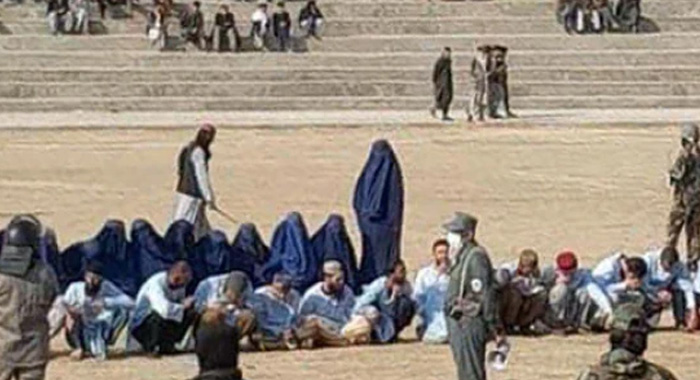
The recently introduced penal code by the Afghan Taliban government has drawn widespread condemnation from Afghan citizens, human rights experts, former government officials, and the international community. The code, which imposes stringent punitive measures, is being criticized for threatening civil liberties, social justice, and human rights in Afghanistan.
Human rights specialists and former Afghan officials argue that the new regulations aim to control society through fear rather than uphold the principles of justice. Richard Bennett, the United Nations Special Rapporteur on human rights in Afghanistan, warned that the repercussions of this legislation could be extremely severe, potentially leading to a further deterioration of the human rights situation in the country.
Rahmatullah Nabil, former head of Afghan National Security, described the penal code as a reflection of the political use of religion and an extremist mindset. He emphasized that such laws foster coercion over justice and undermine societal trust in the legal system.
Muneeza Bakhtari, Afghanistan’s Ambassador to Austria, echoed these concerns, describing the code as representing authoritarian thinking, where the law is wielded as a tool of social control rather than an instrument of fairness and accountability.
Legal experts have highlighted that the new penal code violates fundamental principles of human dignity, civil equality, and legal justice. The Afghanistan Women’s Justice Movement criticized the legislation for officially legitimizing violence and discrimination, particularly against vulnerable populations.
Afghan citizens have taken to social media to denounce the penal code, noting that it promotes brutal social hierarchies and institutionalized inequity. Analysts caution that these measures could severely weaken Afghanistan’s social and political structures, further entrenching fear and oppression within the country.
The international community continues to call on the Taliban government to reconsider the code, align it with international human rights norms, and ensure the protection of Afghan citizens’ basic freedoms. Observers warn that failure to do so could have long-lasting consequences for stability, social cohesion, and the future of justice in Afghanistan.



