
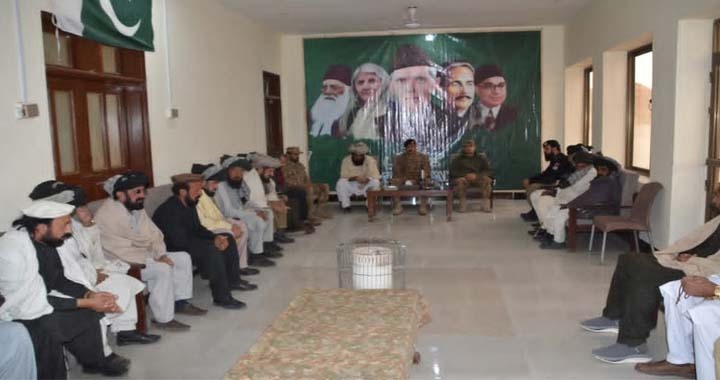
In the backdrop of recent untoward incidents in Tehsil Datakhel, a jirga was convened between the Brigade Commander and tribal elders representing the Manzar Khel and Haidar Khel clans, reaffirming coordination between local communities and security authorities amid renewed militant provocations.
During the sitting, tribal elders presented their concerns in detail, which were heard at length by military officials. Key reservations raised by community representatives were acknowledged, with both sides agreeing to maintain law and order through mutual consultation and structured engagement.
Participants of the jirga reached a consensus that matters relating to civil administration would be formally taken up with the Deputy Commissioner, ensuring institutional handling of governance and service-related issues. It was further agreed that periodic follow-up engagements would be held to review progress and prevent misunderstandings.
The jirga concluded with collective prayers for peace and prosperity in the region, alongside a renewed pledge by tribal leadership to stand shoulder to shoulder with Pakistan’s security forces in defeating terrorist designs. Elders reiterated their resolve to render every possible sacrifice to eliminate militancy and safeguard the area from extremist influence.
The engagement comes days after militants carried out drone attacks on Tabish Post and Toot Narai in DataKhel, injuring several civilians and causing damage to residential structures. Security sources note that such attacks form part of a broader militant strategy aimed at inciting local populations against the armed forces, particularly across Khyber Pakhtunkhwa and Balochistan, including the tribal districts.
However, repeated attempts to fracture public trust in security institutions have failed to gain traction, with local communities continuing to reject militant narratives and instead reinforcing cooperation with law enforcement and military authorities.



