
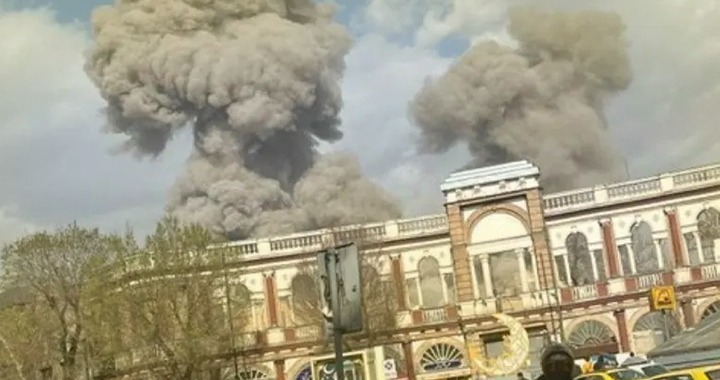
In a dramatic escalation of hostilities, Israel has confirmed that it has launched a series of missile strikes on Tehran, Iran’s capital, marking a significant turning point in the ongoing conflict between the two nations. The strikes, which have resulted in loud explosions and thick smoke rising from the city, have raised the stakes in the already volatile Middle East region.
According to reports from Fars News Agency, the first wave of missiles targeted a site near the offices of Ayatollah Ali Khamenei, the Supreme Leader of Iran, located in central Tehran. Witnesses in the area reported hearing three powerful explosions, followed by dense clouds of smoke rising over the city. The missile strikes also hit critical areas of Tehran, including University Road and the Democratic Area, which are both significant locations in the Iranian capital.
The scale of the explosions and the dense smoke have led to widespread panic in the city, with Iranian state media reporting that several buildings have been severely damaged. The strikes have also been confirmed to have caused significant infrastructural damage to key facilities.
Israeli Defense Minister confirmed in a statement that Israel had initiated a preemptive strike on Iranian soil, targeting strategic military and governmental sites. He described the operation as a “preventive security measure” in response to growing threats from Iran, particularly its nuclear program and its regional military activities.
“We have launched a protective action to neutralize threats from Iranian military infrastructure,” the Israeli Defense Minister stated. “These operations are part of our broader strategy to ensure the security of the Israeli state and its citizens. We will continue to take all necessary steps to protect our national interests.”
The Israeli authorities have also implemented nationwide security measures, including the closure of schools and the activation of sirens across Israel. Citizens have been advised to remain indoors, and large public gatherings have been banned as the country braces for potential retaliatory actions.
As the aftermath of the Israeli strikes unfolds, Iranian state media has broadcast images of thick plumes of smoke rising over Tehran, with significant damage reported in the city’s northern and central districts. Explosions have been heard as far as the suburbs of Tehran, further confirming the widespread impact of the strikes.
The initial attack near Ayatollah Khamenei’s offices is expected to raise tensions significantly, given the symbolic importance of the site. The escalation could trigger a broader regional conflict, with the potential for Iranian-backed militias to retaliate against Israeli interests.
In response to the attacks, the Israeli government has placed its military on high alert and urged the population to remain vigilant. Authorities have advised civilians to stay indoors as a precautionary measure, and Israel’s public transportation system is under heightened security. Emergency response teams are in place to deal with any potential fallout from further escalation.
The IDF has also announced that it is prepared for any further military actions from Iran or its regional allies, with both defensive and offensive capabilities in place should the situation deteriorate further.
Meanwhile, the Pakistani Ministry of Foreign Affairs has issued a travel advisory, urging Pakistani citizens to avoid non-essential travel to Iran amidst the current military actions. The Ministry has also advised Pakistanis residing in Iran to exercise caution and remain vigilant, following the escalation in Tehran.
“We advise all Pakistani nationals to avoid traveling to Iran at this time and to exercise the utmost caution if they are already in the country,” the Ministry stated. “The situation remains fluid, and it is essential for citizens to stay informed and adhere to local safety instructions.”



