
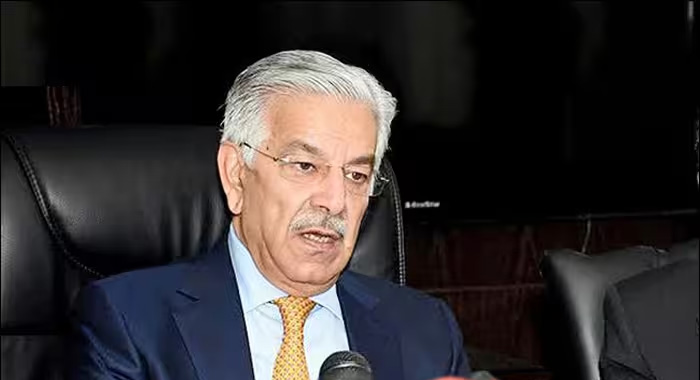
Pakistan’s Defence Minister Khawaja Muhammad Asif has stated that Islamabad no longer trusts the Afghan Taliban, citing their deepening ties with India and warning that Pakistan is fully prepared to confront threats on both its eastern and western borders if necessary.
Speaking in an interview with Geo News, the defence minister expressed serious concern over what he described as the Afghan Taliban’s expanding engagement with New Delhi. He emphasized that Pakistan would not hesitate to respond decisively to any form of aggression, regardless of the direction from which it originates.
When asked whether Pakistan has the military and strategic capacity to fight on two fronts simultaneously, Asif responded unequivocally, stating that the country is fully prepared and capable of defending its sovereignty against multiple threats.
Relations between Pakistan, India, and the Afghan Taliban have markedly worsened in recent months. Pakistan and India were engaged in a four-day military confrontation in May last year, followed by armed clashes between Pakistani forces and Taliban elements in October, further straining regional stability.
The defence minister’s remarks follow statements earlier this week by Pakistan Army spokesperson Lieutenant General Ahmed Sharif Chaudhry, who accused the Afghan Taliban of aligning themselves politically with the government of Indian Prime Minister Narendra Mod an allegation that has heightened security concerns in Islamabad.
Amid escalating tensions with Pakistan, the Afghan Taliban have significantly expanded diplomatic and political engagement with India. Over the past two months, several senior Taliban officials, including three cabinet ministers, have visited New Delhi. Taliban representatives have publicly stated that they are seeking stronger economic ties with India to compensate for losses stemming from a sharp decline in trade with Pakistan.
Pakistani officials view this development as a strategic shift with potential security implications, particularly given the historical regional rivalries and ongoing instability along Pakistan’s western border.
Referring to last year’s conflict with India, Defence Minister Asif noted that Pakistani fighter aircraft were tested under real combat conditions, providing valuable operational experience. He added that, following the conflict, Pakistan has received significant international orders for combat aircraft, which he described as a clear vote of confidence in the country’s defence technology and military capabilities.
The statements from Pakistan’s civilian and military leadership signal a hardening stance amid a volatile regional environment. Analysts note that growing distrust, shifting alliances, and unresolved disputes are increasing the risk of escalation, making diplomacy and confidence-building measures increasingly difficult but more critical than ever.
Pakistan has reiterated that while it seeks stability and peaceful relations with its neighbors, it remains fully prepared to safeguard its national security and territorial integrity.



