
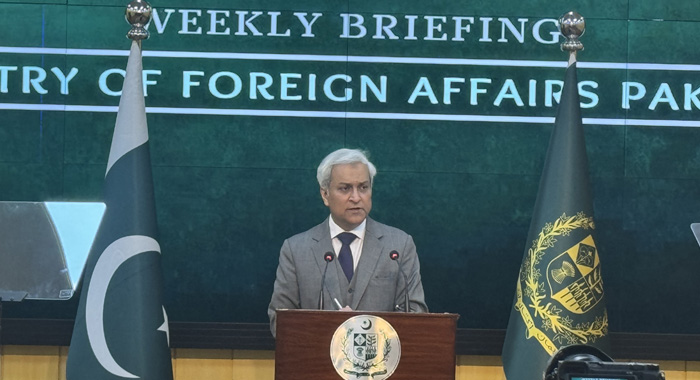
The Spokesperson of the Ministry of Foreign Affairs of Pakistan, Mr. Tahir Andrabi, has underscored Pakistan’s serious security concerns regarding the presence of the mastermind behind the recent Islamabad suicide attack in Afghanistan, while reaffirming the government’s resolve to address the matter through sustained diplomatic engagement and international cooperation.
Speaking at his weekly press briefing, the Foreign Office spokesperson stated that the principal architect of the devastating suicide blast at an Imam Bargah (Shia mosque) in Islamabad which claimed the lives of more than 30 worshippers has been identified as being present in Afghanistan. Responding to questions concerning the involvement of Islamic State Khorasan Province (ISKP/Daesh), Mr. Andrabi noted that available information indicates the group’s operational leadership continues to function from Afghan territory.
He further referenced findings of the United Nations Security Council Sanctions Committee, stating that the Committee’s latest report corroborates the presence of Daesh elements in Afghanistan and highlights their role in planning and orchestrating terrorist attacks across the region.
“Primarily, Pakistan is taking this matter up with international partners,” the spokesperson emphasized, adding that the issue remains an integral component of Pakistan’s ongoing dialogue mechanisms concerning Afghanistan.
Commenting on the most recent Sanctions Committee report, Mr. Andrabi stated that the document extensively supports Pakistan’s long-standing position regarding the activities of Tehreek-e-Taliban Pakistan (TTP) and its operational linkages within Afghanistan. The report highlights critical concerns about the continued presence of TTP and Al-Qaeda in Afghan territory.
According to the report, TTP has been afforded increased operational latitude and support by the de facto Afghan authorities, resulting in escalated attacks inside Pakistan. The report further underscores that Al-Qaeda continues to benefit from direct patronage and functions as a force multiplier and service provider to various armed terrorist entities in Afghanistan, including TTP particularly in areas of training, facilitation, and strategic guidance.
The spokesperson also drew attention to references within the report indicating collaboration among Baloch Liberation Army, TTP, and ISKP. This cooperation reportedly includes shared training camps, pooled logistical resources, coordinated attacks, and high-level meetings between field commanders.
Summarizing the findings, Mr. Andrabi noted that the report substantiates Pakistan’s position that the resurgence of TTP is closely linked to developments following the 2021 interim government takeover in Afghanistan. He reiterated Pakistan’s expectation that Afghan territory should not be used for terrorist activities against any country, particularly Pakistan.
The Government of Pakistan remains committed to engaging constructively with regional and international partners to ensure that collective efforts are undertaken to dismantle terrorist networks and prevent cross-border militancy. Pakistan also continues to advocate for coordinated global action to address threats posed by terrorist organizations operating in and from Afghanistan.
Reaffirming Pakistan’s unwavering commitment to safeguarding its sovereignty and protecting its citizens, the Foreign Office stressed that accountability, counterterrorism cooperation, and adherence to international obligations remain central to achieving lasting peace and stability in the region.



