
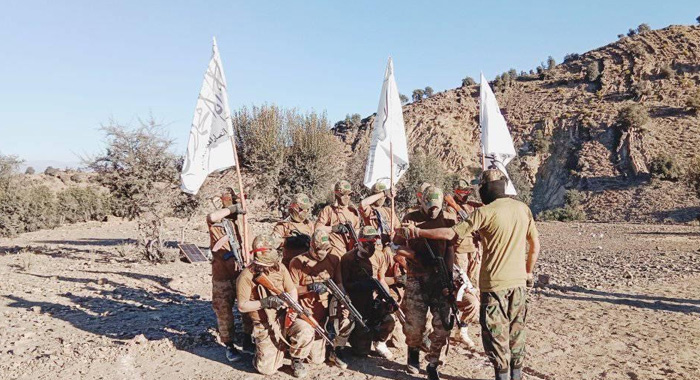
The militant landscape in Pakistan’s tribal belt appears to be undergoing a significant shift following the reported announcement of a new 2026 organizational structure by the banned outfit Tehreek-e-Taliban Gulbahadur (TTG). The development points to a more structured, decentralized, and geographically expanded operational framework.
According to informed sources, the group continues to be led by Hafiz Gul Bahadur, maintaining leadership continuity at the top level. Operational command has reportedly been assigned to Commander Talwar, with Mullah Rahbar serving as deputy, indicating a more clearly defined chain of command.
While the leadership structure shows limited changes compared to 2025, the 2026 framework reflects a notable expansion in territorial scope. Previously concentrated in North Waziristan, the group’s operational footprint has now extended into additional regions, including Wana in South Waziristan, Khyber, and Bannu.
Each of these areas has been assigned designated commanders and deputies. Wana is reportedly led by Commander Nasir, supported by deputies Zandan and Haqani. In Bannu, leadership has been assigned to an individual identified as Pashtun, with Khalid and Saif Ullah serving as deputies. In Khyber, operational command is said to rest with Qari Omer, assisted by Tariq and Musa.
Within North Waziristan, the group has expanded its zonal structure from eight zones in 2025 to twelve in 2026. Newly added zones include Alwara, Dosali, Miranshah, and Khaisoor. Each zone is overseen by a designated head and deputy responsible for local coordination and operational oversight, reflecting a shift toward greater decentralization.
A key feature of the restructuring is the formalization of specialized militant formations referred to as “Kandak,” which function as suicide brigades. The group is reported to maintain six such brigades, including Al Mansoor Kandak, Al Badar Kandak, Khalid Bin Waleed Kandak, Al Hamid Kandak, Huzaifa Kandak, as well as associated formations such as Aswad-ul-Harab and Jaish Umari.
Sources indicate that four of these brigades are currently operating under a broader alliance framework known as Ittihad-ul-Mujahideen Pakistan (IMP), following reported coordination between TTG and allied groups including Lashkar-e-Islam and Inqlabi Islami Pakistan. The remaining brigades maintain operational alignment with TTG while operating with varying levels of autonomy.
Each brigade is supported by specialized units responsible for suicide attacks, improvised explosive devices, sniping, intelligence gathering, and ambush operations. The group also maintains media units that disseminate messaging and operational claims.
Leadership of several brigades has also been identified. Al Mansoor Kandak is reportedly led by Faisal Saeed and includes a sub-unit known as Sheikh Saadi Caravan. Al Badar Kandak is headed by Sadiq Noor Gurbaz, supported by Jabhat-ul-Ansar Al Mahdi Al Khorasan. Al Hamid Kandak is under the command of Commander Talwar, who also serves as the group’s overall operational head, and oversees a sub-unit known as Aswad-ul-Khorasan.
The Khalid Bin Waleed Kandak, previously known as Al Hamza Istishhadi Brigade before being renamed in September 2025, is reportedly supported by a sub-group called Jaish Firasan Mohmand, although its current leadership remains unclear. Meanwhile, Aswad-ul-Harab and Jaish Umari maintain independent operational capabilities, with Jaish Umari having reportedly rejoined the group after a prior split.
Geographically, four of the six suicide brigades are believed to be based in North Waziristan, while the remaining formations operate in Khyber, indicating a distribution of high-impact operational capacity across multiple regions.
Security analysts assess that the emergence of a more defined command hierarchy, expanded territorial presence, and specialized operational units reflects a deliberate attempt by TTG to reposition itself as a more organized and capable militant entity. The emphasis on multiple suicide brigades suggests continued intent to carry out high-impact attacks.
The announcement of the 2026 structure is being viewed as a strategic effort to formalize internal command, broaden geographic reach, and strengthen coordination. Experts warn that such developments underscore the evolving and increasingly complex security environment in Khyber Pakhtunkhwa, requiring sustained vigilance and adaptive responses.



