
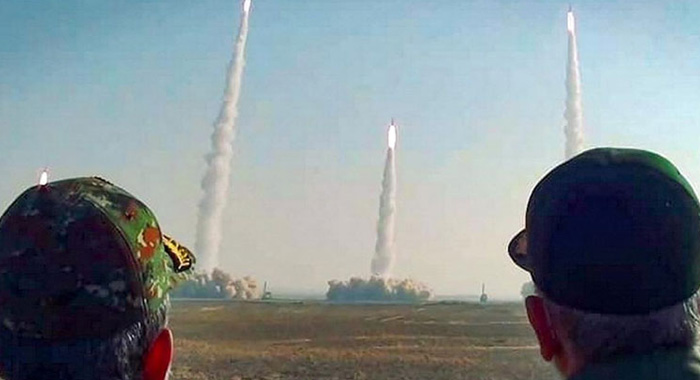
In a major escalation of hostilities, Iran has officially initiated a retaliatory military operation against Israel in response to ongoing Israeli aggression. The operation, named “Fateh Khyber”, has seen **Iranian forces launch a series of ballistic missiles aimed at strategic Israeli targets. Israeli authorities are scrambling to counter the missile strikes, with the Israeli Air Force actively engaged in an attempt to intercept the incoming missiles.
In a swift response to Israeli military actions, Iranian officials confirmed that they had successfully launched multiple ballistic missiles targeting key locations within Israel, including northern Israel and the coastal city of Haifa. The Iranian missiles were launched as part of a strategic effort to neutralize Israeli military assets and convey a strong message of defiance against continued Israeli provocations.
The Israeli defense systems, including the Iron Dome missile defense system, have been activated in a desperate attempt to intercept the Iranian missiles, though reports suggest that some missiles have already reached their intended targets.
According to Israeli military reports, the Israeli Air Force is currently in full operation, attempting to intercept the incoming Iranian missiles. The activation of Israel’s defense systems indicates the high level of urgency, as authorities in northern Israel and Haifa report continued siren alarms in the region, signaling potential threats of missile impact.
The New York Times has reported that in response to the Iranian missile strikes, Israel’s defense systems are now on high alert, with civil defense mechanisms working to protect civilians and minimize casualties in the affected areas.
As tensions continue to rise, Israeli Prime Minister Benjamin Netanyahu has officially confirmed the commencement of a joint military operation alongside the United States against Iran. In a public statement, Netanyahu declared that the U.S.-Israel partnership was taking decisive action to eliminate the threat posed by Iran, emphasizing that Israel and its allies would do everything necessary to prevent Iran from achieving nuclear capabilities.
“The operation we’ve initiated today is a direct response to Iran’s provocative actions. The goal is clear: to eliminate the existential threats posed by Iran’s nuclear ambitions, and to restore peace and security to the region,” Netanyahu said. “This operation will allow the Iranian people the chance to make their own decisions, free from the tyranny of a regime that seeks to destabilize the entire Middle East.”
The retaliatory strikes come amid rising concerns within the international community, as this new phase of conflict escalates tensions in the Middle East. With Iran retaliating forcefully against Israeli provocations, global powers have expressed deep concern over the growing risk of a full-scale regional conflict.
Iran’s retaliation is being viewed as a significant step in its broader strategy to counter Israel’s continued military actions and assert its position on the world stage. The operation’s name, “Fateh Khyber”, carries symbolic weight, referencing historical victories and signaling Iran’s intent to assert its regional dominance.
As the situation intensifies, both Israeli and Iranian civilians are facing the harsh consequences of this conflict escalation. In Israel, authorities are urging citizens to take shelter and remain indoors as missile strikes continue. Meanwhile, Iran has also braced for potential retaliation, with its military preparing for further Israeli strikes.
The international community is closely monitoring developments, as diplomatic efforts intensify to bring both sides to the negotiating table and prevent further civilian casualties.
With tensions between Iran and Israel now reaching new heights, the world faces a critical moment of uncertainty. The retaliatory actions of Iran and the announcement of a joint U.S.-Israel operation signal a significant shift in the ongoing conflict, and the region’s future remains unclear.



