
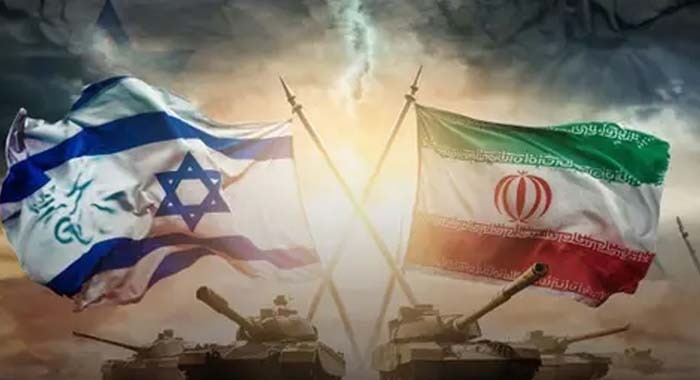
The ongoing conflict between the United States, Israel, and Iran has intensified dramatically, expanding beyond the immediate combat zone to involve the Gulf region, Lebanon, and Iraq. Recent reports indicate large-scale strikes, rising casualties, and heightened geopolitical tensions, raising concerns over regional stability and international security.
The United States and Israel have continued large-scale military operations on Iranian territory, targeting oil depots and refining facilities for the first time since the onset of hostilities. Notably, a massive fire was reported at the Shahran oil depot on the outskirts of Tehran on Saturday, allegedly following Israeli strikes on fuel storage sites linked to the Iranian armed forces.
The cumulative toll of the conflict has risen sharply, with at least 1,332 people reportedly killed since February 28. In addition, humanitarian organizations have expressed alarm over potential war crimes, including a strike on a primary school in southern Iran that killed at least 160 civilians, many of them children. Human Rights Watch and Al Jazeera investigations suggest the attack may have been deliberate.
Despite Iranian President Masoud Pezeshkian’s promise to halt attacks on neighboring Gulf states if their territories were not used against Iran, Iranian forces continued strikes on US and Israeli military assets in Kuwait, Qatar, Saudi Arabia, and the United Arab Emirates.
-
The Iranian military maintains that the Strait of Hormuz remains open but has warned it will target any US or Israeli ships attempting passage.
-
Ayatollah Mohammad-Mahdi Mirbagheri indicated a decision regarding the successor to the late Supreme Leader Ali Khamenei may be imminent.
-
Intelligence reports from the US National Intelligence Council suggest that while a large-scale US-led campaign is unlikely to topple the Iranian government, ongoing operations are causing significant economic and strategic disruptions, including multiyear highs in global oil prices.
Iranian drone and missile attacks have targeted multiple Gulf nations despite assurances from Tehran:
-
Bahrain: A water desalination plant was damaged in a drone strike.
-
Kuwait: Two border security personnel were killed, with attacks on airports and public offices reported.
-
UAE: Four fatalities reported; several missiles and drones intercepted by air defenses.
-
Saudi Arabia: Drone attacks on Riyadh were reportedly foiled.
The Gulf Cooperation Council (GCC) and the Arab League have condemned the attacks, describing them as “dangerous acts of aggression” threatening regional stability. Airspace closures and flight cancellations have prompted emergency operations, with Qatar Airways rerouting international flights through dedicated emergency corridors.
Iranian missiles targeted southern Israel, activating air raid sirens in the Negev Desert. The Israeli military reported the first combat fatalities among its soldiers since hostilities resumed, while Hezbollah claimed attacks on northern Israeli military sites and towns.
In Lebanon, Israeli strikes on Beirut, including hotels allegedly housing Quds Force operatives, resulted in at least four deaths and ten injuries. Lebanese authorities reported a total of 394 fatalities, including 83 children and 42 women, over the past week. Thousands of residents in southern Lebanon, including Tyre and the southern suburbs of Beirut, have been displaced and sought shelter in schools.
Iraqi and Kurdish Peshmerga forces reported aerial threats from Iranian drones over Sulaimaniyah, with no confirmed incursions into Iranian territory. The US reportedly engaged with Kurdish and Iranian opposition groups, though no cross-border operations have been carried out by Iraqi forces.
President Donald Trump stated that the conflict would continue for “a little while,” emphasizing that the US is not seeking a negotiated settlement with Tehran. The US has suffered casualties, including six service members killed in retaliatory Iranian strikes. Pentagon officials warned Iran of further consequences for attacks on US personnel, signaling continued military engagement.
Discussions within US-Israel military coordination reportedly include the potential future deployment of special forces to secure Iran’s highly enriched uranium stockpiles, underscoring the broader strategic stakes.
The ongoing conflict has destabilized key energy and maritime corridors, with global oil prices surging and the Strait of Hormuz effectively disrupted. Gulf states, Iran, Lebanon, Iraq, Israel, and the US remain on high alert, with diplomatic and humanitarian responses under pressure.
The escalation highlights the complex interplay of regional power dynamics, proxy engagements, and the potential for further cross-border confrontations. The international community continues to monitor developments closely, urging restraint, conflict de-escalation, and adherence to international humanitarian law.



