
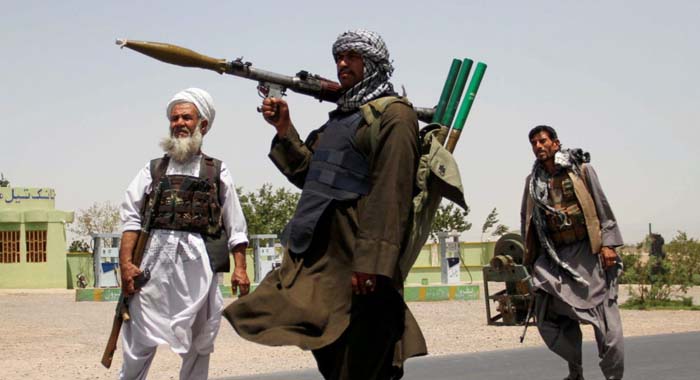
Afghanistan, once again, stands at the epicenter of global jihadist ambitions. Reports from Moscow’s Nezavisimaya Gazeta indicate that the Taliban intelligence service has created a “coordination center” in Kabul for foreign jihadists, uniting fighters from China, Russia, Syria, and Central Asia under a single operational platform. Uyghur militant groups are said to play a leading role in this emerging hub. If these reports are accurate, the implications for regional and global security are deeply troubling. Afghanistan under the Taliban is not a stabilizing force; it is a crucible of extremism poised to project violence far beyond its borders.
Since their return to power in August 2021, the Taliban have sought to portray themselves as a nationalist government capable of providing security and governance. Diplomatic overtures and regional engagement have often been framed as efforts to encourage moderation, with China, Russia, and neighboring countries betting that engagement might temper the Taliban’s radical tendencies. Yet the establishment of a centralized coordination hub for foreign jihadists in the heart of Kabul shatters this illusion. It suggests that the Taliban are either complicit in, or incapable of, preventing Afghanistan from becoming a safe haven for global militants.
The creation of such a platform represents a stark evolution in the Taliban’s approach to foreign fighters. Previously, the group tolerated the presence of transnational militants, offering them a degree of freedom while largely avoiding direct operational coordination. Today, the intelligence service appears to have institutionalized this relationship, providing an organized structure through which foreign jihadists can plan, recruit, and train. Fighters from diverse regions, each with unique strategic priorities, are brought together in one operational space, creating opportunities for collaboration that amplify the reach and sophistication of their campaigns. Uyghur militants, in particular, are emerging as a central element of this nexus, posing a direct challenge to Chinese security and signaling a broader international dimension to Afghanistan’s instability.
The implications for regional stability are profound. Afghanistan has a long history as a magnet for jihadists. During the 1990s, the country became a sanctuary for al-Qaeda and other extremist groups, culminating in attacks that reverberated across the globe. Efforts to disrupt this environment after 2001 temporarily curtailed Afghanistan’s role as a jihadist incubator. Now, two decades later, the country appears poised to revert to its former status, but on a potentially larger and more coordinated scale. Central Asian fighters, Uyghur militants, and veterans of conflicts in Syria and the broader Middle East are reportedly converging under the Taliban’s supervision, creating a network with the capability to export violence beyond Afghanistan’s borders.
China faces a particularly acute threat from this development. Uyghur militant groups, long hostile to Beijing’s policies in Xinjiang, could use Kabul as a secure operational base to plan attacks or organize transnational recruitment. The Taliban’s tacit facilitation of these groups undermines Chinese security investments, including border controls and intelligence cooperation, while also jeopardizing strategic projects such as the Belt and Road Initiative. The presence of a coordinated jihadist hub in Afghanistan elevates the risk of attacks against Chinese interests and provides a platform for propaganda that could inspire further militancy.
For Russia, the hub also represents a significant security dilemma. Central Asian militants with links to the Caucasus or other Russian regions could leverage the coordination center to plan attacks on Russian territory. Moscow’s engagement with the Taliban, framed around combating ISIS-Khorasan, is complicated by the Taliban’s broader tolerance or even support of foreign jihadists. A government that permits the establishment of such a hub cannot credibly claim to be a partner in regional security.
The Taliban have consistently denied the presence of foreign jihadists within Afghanistan, insisting that the country is fully under their control and that they are committed to preventing extremist activity. Yet the emergence of a centralized coordination hub in Kabul directly contradicts these claims. It exposes the regime’s inability or unwillingness to separate its own governance agenda from the transnational ambitions of militant networks operating on its soil. Afghanistan is not merely an unstable state; it is a launchpad for extremism with the potential to destabilize entire regions.
The international community must confront the reality that engagement with the Taliban carries serious risks. Diplomacy, recognition, or security cooperation cannot substitute for verification of Taliban policies on counterterrorism. The presence of a coordination center for foreign jihadists signals that Afghanistan is once again a sanctuary for extremists, where local grievances are transformed into global threats. The Taliban are not neutral arbiters of Afghan security; they are facilitators of a network that could destabilize neighboring states, threaten major powers, and export violence far beyond Afghanistan’s borders.
Afghanistan under the Taliban is no longer merely a domestic challenge. It is a regional and global one, with consequences for China, Russia, Central Asia, and beyond. The myth of the Taliban as a stabilizing force has been shattered by their facilitation of a jihadist command hub in Kabul. Diplomacy based on hope and rhetoric is no longer sufficient. Afghanistan has returned to its dark role as a crucible of global jihad, and the world must act decisively to prevent the consequences from spiraling beyond control.



