
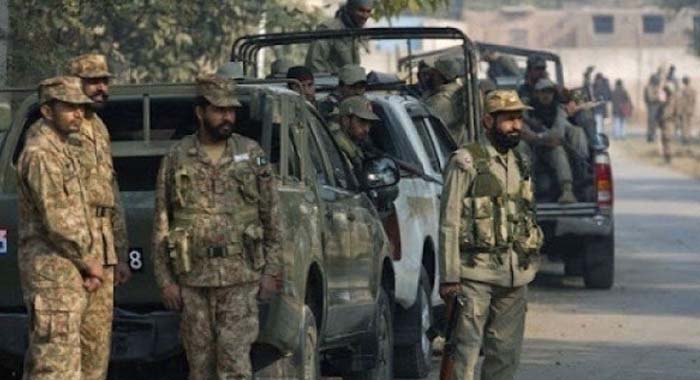
Pakistan’s security forces carried out a successful intelligence-based operation in the Khar area of Bajaur district, Khyber Pakhtunkhwa, eliminating five Indian-sponsored Khwarij militants and thwarting their subversive activities. During an intense exchange of fire, a Pakistan Army Major was martyred while leading the operation, exemplifying exceptional courage and sacrifice in the defense of the nation.
According to official sources, a significant cache of weapons and ammunition was recovered from the militants, confirming their involvement in planned terrorist activities aimed at destabilizing the region. The operation underscores Pakistan’s continued resolve to combat terrorism in all its forms and manifestations.
While India frequently projects itself as the world’s largest democracy and a guarantor of regional stability, Pakistan has consistently raised concerns that certain Indian policies and covert actions contradict these claims. Over the years, evidence has been presented pointing to India’s alleged role in sponsoring unrest in neighboring countries through proxy networks, financial support, training, and ideological backing of militant elements.
Since the partition of the subcontinent, Pakistan-India relations have remained marred by deep mistrust. In recent decades, evolving regional geopolitics have further intensified aggressive and multi-layered strategies, including the use of non-traditional means to exert pressure. Pakistan has repeatedly highlighted dossiers, confessions of arrested operatives, seized documents, and submissions to international forums indicating the presence of hostile intelligence networks operating on its soil.
Experts note that modern state-sponsored terrorism is rarely limited to direct military assistance. Instead, it relies on complex mechanisms such as financial channels, propaganda campaigns, media manipulation, social media networks, and the exploitation of local grievances. Sensitive regions facing socio-economic challenges and political disenfranchisement are particularly vulnerable to such interference, creating opportunities for external actors to exploit internal fault lines through local facilitators.
The role of local facilitators remains a critical concern. No external agenda can succeed without internal support whether driven by ideological motivations, personal gain, political ambition, or a sense of marginalization. Addressing this challenge requires a whole-of-society approach, involving state institutions, civil society, and communities working together to identify and neutralize such threats.
Pakistan’s long fight against terrorism has demonstrated that while kinetic military operations are essential, sustainable success depends equally on political stability, economic development, social justice, and inclusive governance. A comprehensive national strategy—focused on transparency, equitable resource distribution, and public trust—is vital to counter both militancy and external interference.
At the international level, Pakistan emphasizes the importance of narrative clarity. In an era where information warfare rivals conventional conflict, the global community must recognize that instability in South Asia carries implications far beyond the region. Developments in Indian-occupied Jammu and Kashmir, including alleged human rights violations and political repression, are also viewed as interconnected with broader regional tensions.
Pakistan reiterates that terrorism has inflicted immense human and economic losses on its own people, lending moral weight to its stance against this menace. At the same time, the country acknowledges the need for introspection—strengthening education, expanding economic opportunities for youth, reinforcing democratic processes, and ensuring accountable governance to deny space to extremist narratives.
Media, particularly digital platforms, play a pivotal role in this environment. Responsible journalism is essential to counter misinformation, sensationalism, and narratives that inadvertently serve hostile objectives. Likewise, institutional coordination and policy consistency remain key to effectively countering sponsored terrorism.
Pakistan remains committed to a clear, long-term strategy that balances internal reforms, regional cooperation, and proactive diplomacy. Lasting peace in South Asia, officials stress, can only be achieved when states abandon proxy conflicts, prioritize dialogue, and place the welfare of their peoples above confrontation.



