
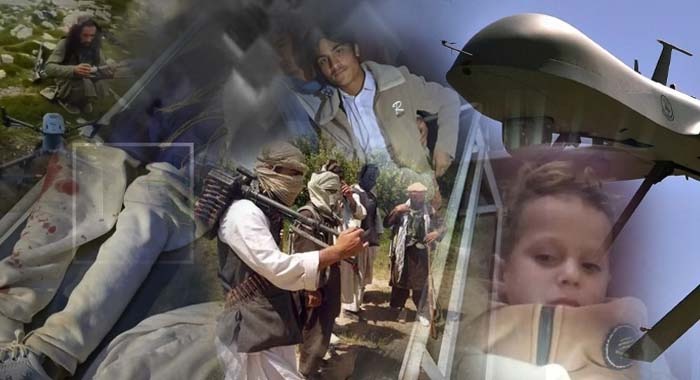
The drone strike in Mosaki village, Mir Ali, which injured three children and two men, is not an isolated incident. It is part of a disturbing evolution in militant tactics, one that increasingly places civilians, especially children, directly in harm’s way. What makes this trend particularly alarming is not just the technology involved, but the intent behind its use.
Over the past months, Pakistan’s former tribal districts and adjoining areas have witnessed a steady rise in attacks involving quadcopters and improvised drones. These devices, often commercially available and crudely modified to carry explosives, lack precision by design. When deployed near homes, schools, or open spaces, they turn everyday civilian environments into potential killing zones.
Mir Ali has seen this before. Children have been injured by unexploded devices left behind by militants. Civilians have been hurt by aerial attacks that do not discriminate between targets. Each new incident reinforces a grim reality, that for banned militant outfits, civilian safety is not collateral damage, it is an acceptable cost.
A Calculated Pattern
Security assessments and video evidence released over time point to a calculated pattern. Militants frequently operate from within civilian localities, often deliberately keeping women and children nearby. When casualties occur, the same groups pivot quickly to information warfare, accusing state institutions and attempting to manipulate public sentiment.
This dual strategy, physical harm followed by narrative distortion, is now a hallmark of what the state has described as Fitna al-Khwarij. The goal is not only to inflict damage but to blur responsibility, generate fear, and erode trust between citizens and security forces.
The Mir Ali drone strike fits squarely within this trajectory.
Children as the Primary Victims
What distinguishes recent months from earlier phases of militancy is the increasing number of children among the injured and dead. From Panjgur to Bannu, from Kurram to Tank, and now Mir Ali, minors have been wounded by rockets, drones, unexploded ordnance, and targeted attacks.
These are not accidental victims of crossfire. They are casualties of tactics that show blatant disregard for basic moral, legal, and religious boundaries.
No ideology, no grievance, and no political objective can justify a method of warfare that repeatedly places children at risk. In any framework, humanitarian, legal, or Islamic, such acts fall outside the bounds of legitimacy.
The Broader Security Challenge
The spread of drone-based attacks also reflects a shifting security challenge. Unlike traditional militant assaults, these devices are harder to detect, cheaper to deploy, and designed to evade conventional defenses. Their use signals adaptation, not strength, but it also demands an equally adaptive response.
Authorities have issued repeated public advisories warning civilians about explosive remnants and urging vigilance. Bomb disposal units continue clearance operations, and several attacks have been foiled through intelligence-based interventions. Yet the persistence of these incidents highlights the limits of reactive measures alone.
Protection of civilians, especially children, must remain central to counterterrorism strategy, not as an afterthought but as a core objective.
Beyond the Immediate Blast
For residents of Mir Ali and similar areas, the impact of a drone strike does not end when the wounded are discharged from hospital. It lingers in fear, disrupted routines, and the quiet anxiety of parents watching the sky, unsure whether the next device will fall near a playground, a home, or a school.
Militancy thrives in environments where fear replaces normalcy.
The drone strike in Mir Ali is therefore not just a security incident. It is a warning. A warning that militant violence is evolving, that children are increasingly in the crosshairs, and that confronting this threat requires not only tactical responses but sustained political resolve, regional accountability, and unwavering clarity about who the perpetrators are.
When drones become weapons against children, the line between militancy and moral collapse has already been crossed.



