
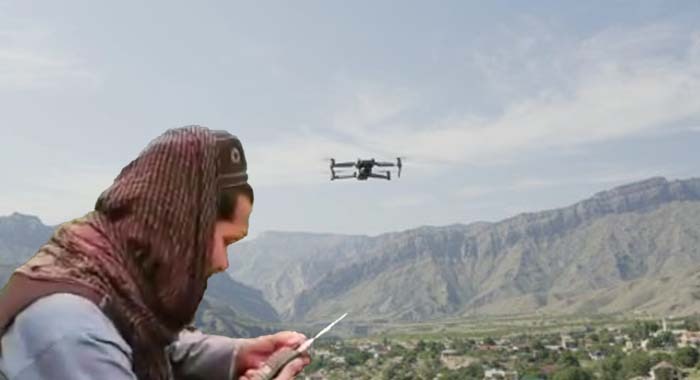
Recent developments have revealed that Tehrik-e-Taliban Pakistan (TTP) has formally established a dedicated Air Force department as part of its 2026 military cabinet, marking a significant and alarming escalation in the group’s operational capabilities. While largely unnoticed, this announcement signals TTP’s deliberate move toward greater organizational sophistication, technical capacity, and cross-border threat projection against Pakistan.
The TTP Air Force is not merely symbolic. Its primary mission is to conduct suicide drone attacks against Pakistani security forces in Khyber Pakhtunkhwa, Balochistan, and Punjab provinces, extending the group’s reach beyond traditional border and tribal areas. The unit also serves intelligence and reconnaissance functions, tracking army movements, monitoring deployments, and providing early warning for leadership protection. This professionalization of force protection and targeting underscores TTP’s evolution into a networked, hybrid threat with the potential to operate with near state-level coordination.
Pakistan’s intelligence and counterterrorism agencies have confirmed that the creation of this Air Force has been enabled by external actors, including the Taliban’s Haqqani Network, al-Qaeda’s senior leadership, and Iran’s IRGC-linked entities. Iranian drone companies Rayan Roshd Afzar and Oje Parvaz Mado Nafar are reportedly providing technical assistance under IRGC supervision, highlighting the cross-border and internationally coordinated nature of this emerging threat.
Leadership of the TTP Air Force demonstrates deep operational integration with the Haqqani Network. Key figures include Mawlawi Salim Haqqani (Barat Zadran), who brings extensive experience in training suicide bombers and maintaining Haqqani operational links; Mawlawi Noor Wali Hamza, bridging dual roles within TTP and Haqqani networks; and Mufti Jannati (Mufti Gul Hassan Madakhel), credited with targeting Pakistani drones. These leaders ensure that TTP’s Air Force is not only technically capable but embedded within a resilient, professional, and networked insurgent infrastructure.
Financing for the Air Force comes from narcotics trafficking networks operating across Afghanistan, including large-scale opium, heroin, and methamphetamine production in Farah, Nimroz, and Helmand provinces. These operations are tied to TTP’s broader transnational alliances, including the Taliban, al-Qaeda, and Iran-aligned militias, creating a well-funded, institutionalized threat that directly targets Pakistani national security.
Pakistan’s security forces, however, remain highly vigilant and capable. Years of operational experience, cutting-edge counterterrorism training, and effective intelligence coordination have ensured that the country is prepared to neutralize emerging threats such as TTP’s drone operations. Pakistan’s Army, Counter Terrorism Departments, and allied security agencies continue to demonstrate resilience and operational superiority in safeguarding national borders, urban centers, and critical infrastructure.
The emergence of TTP’s Air Force underscores the evolving nature of militant threats in the region. The group is no longer a local insurgency; it operates as a hybrid, networked organization with technical sophistication, external enablers, and lethal intent. Pakistan remains committed to dismantling these threats, protecting its citizens, and ensuring that no terrorist organization or foreign actor can destabilize its territory.
This development also serves as a reminder that regional and global cooperation in intelligence-sharing, counterterrorism operations, and border security is crucial to containing threats posed by hybrid insurgent networks. Pakistan’s proactive approach, operational readiness, and coordination with international partners position it as a strong defender against these evolving terrorist capabilities, ensuring stability and security for its population.
Pakistan’s resolve is clear: while TTP seeks to project power and disrupt national security through unlawful, foreign-backed means, the country’s security forces are trained, equipped, and determined to meet any threat—on the ground, in the air, and across borders.



