
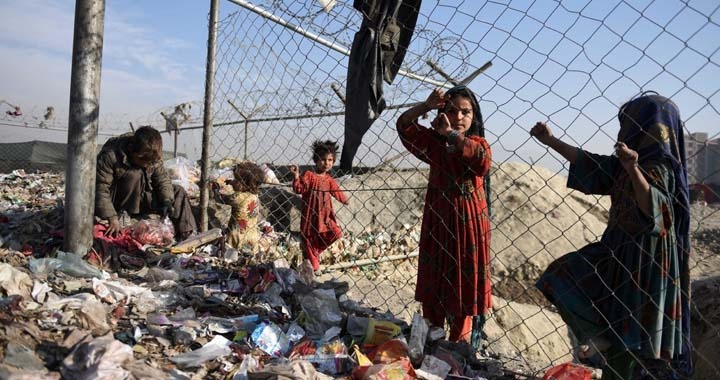
Afghanistan has been ranked among the most insecure countries in the world, as persistent political instability, economic collapse, humanitarian distress, and severe restrictions on women continue to drive insecurity and mass migration, according to a leading international research body.
The Institute for Economics and Peace (IEP) has placed Afghanistan among the six least secure countries globally, alongside Yemen, the Democratic Republic of Congo, Sudan, Russia, and war-ravaged Ukraine. The findings highlight that despite a decline in large-scale armed confrontations since the Taliban takeover, Afghanistan remains deeply unstable due to systemic governance failures and widespread social vulnerability.
According to the institute’s latest assessment released on Saturday, December 27, Afghanistan ranks as the most insecure country in South Asia. The report points to unchecked access to weapons, the presence of unaccountable armed actors, rising criminal activity, political uncertainty, and large-scale displacement as key drivers of insecurity.
The IEP ranked Afghanistan 158th out of 163 countries on its Global Peace Index, placing it near the bottom worldwide. The report also noted that Afghanistan bears one of the highest economic burdens of violence globally, with costs exceeding 40 percent of its gross domestic product on par with Ukraine.
The Global Peace Index emphasizes that insecurity extends beyond battlefield violence. It evaluates social cohesion, political stability, internal and external tensions, and the level of state militarization. According to the institute, true peace requires functioning institutions, economic opportunity, and social trust conditions largely absent in Afghanistan.
The report further highlights the collapse of essential services as a critical indicator of Afghanistan’s deteriorating social stability. The country’s health system has been severely weakened by reduced international funding, with the World Health Organization reporting that nearly 80 percent of health services were scaled back this year due to budget constraints.
Afghanistan also remains one of the world’s largest sources of refugees. By mid-2024, Afghans accounted for a significant portion of the global refugee population, alongside Syrians, Ukrainians, and Venezuelans. The exodus is driven by unemployment, fear of Taliban enforcement, and sweeping restrictions on women’s education and participation in the workforce, which have eroded household security and long-term prospects.
Meanwhile, strained relations between the Taliban authorities and neighboring countries, particularly Iran and Pakistan, have resulted in mass deportations of Afghan migrants. International humanitarian organizations warn that Afghanistan lacks the infrastructure, resources, and public services to absorb returning populations, further deepening humanitarian and environmental pressures.
The IEP contrasted Afghanistan’s condition with the world’s most peaceful countries such as Iceland, Ireland, New Zealand, Australia, and Switzerland—underscoring how political stability, economic resilience, and social inclusion are essential foundations for peace.
The findings paint a stark picture of Afghanistan as a country trapped in a cycle of insecurity, where the absence of inclusive governance and economic opportunity continues to undermine both domestic stability and regional security.



